
By Sharon Akuboh
Kano State Commissioner for Information and Internal Affairs, Comrade Ibrahim Abdullahi Waiya, has emerged winner of the Crisis Communicator Award at the 6th National Spokespersons Awards held in Abuja.
Waiya received the prestigious honour on Thursday, August 13th 2026, at Nicon Luxury Hotel during the 4th Economic Confidential Lecture and 6th National Spokespersons Awards organised by Image Merchants Promotion Limited (IMPR).
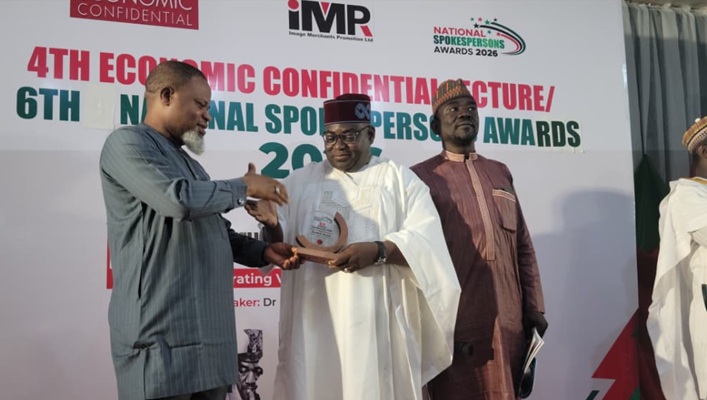
The 2026 event, themed “Anti-Corruption Reforms, Economic Stability and Effective Communication,” brought together public officials, communication professionals, media practitioners and other stakeholders.
Waiya was recognised for his role in providing steady, verified and timely information during challenging situations, helping to promote calm, manage public expectations and strengthen citizens’ confidence in government actions.
Waiya Credits Governor Yusuf
Speaking with journalists after the ceremony, Waiya attributed the achievement to the support and backing of Kano State Governor, Abba Kabir Yusuf, saying the Governor had created an enabling environment for the Ministry of Information and Internal Affairs to effectively discharge its responsibilities.
The Commissioner dedicated the award to Governor Yusuf, describing it as a recognition of the administration’s commitment to effective communication, transparency and inclusive governance.
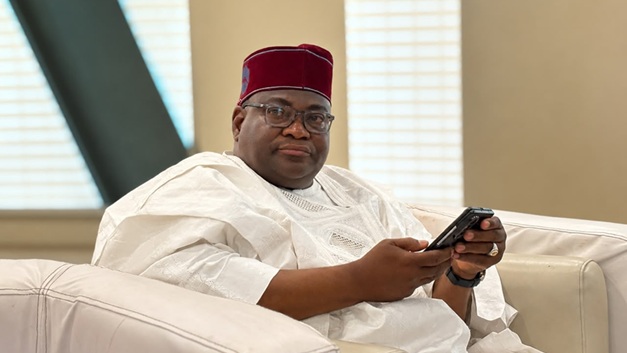
Waiya further noted that the award was particularly significant because, according to him, it marked the first time a recipient from the North-West had won a National Spokespersons Award since its inception, as well as the first time the honour had come to Kano State.
Awards Focus on Professionalism, Public Trust
Earlier, Chairman of the 2026 jury, Prof. Saudat Salah Abdulbaqi, said the National Spokespersons Awards had evolved beyond an annual ceremony into an important platform for promoting professionalism, effective communication and public trust.
She said the responsibility of a spokesperson extended beyond merely speaking on behalf of an organisation, stressing that professional spokespersons must build understanding, manage expectations, protect institutional credibility and earn public confidence.
According to her, the 2026 edition attracted 171 nominations, with 99 entries passing the initial eligibility screening.
Following further assessment, 42 entries emerged as finalists, while the final review produced 30 finalists across 15 categories.
Abdulbaqi explained that entries were assessed based on impact, innovation and originality, campaign reach, and the quality of evidence submitted.
She emphasised that the jury placed priority on measurable results and demonstrated impact rather than merely well-presented campaigns, adding that entries that failed to meet the required standards were not selected simply to fill available award slots.
ICPC Chairman Warns on Cost of Corruption
Meanwhile, Chairman of the Independent Corrupt Practices and Other Related Offences Commission (ICPC), Dr Musa Adamu Aliyu, SAN, described corruption as a global challenge capable of distorting economies, widening inequality and undermining national security.
Delivering the keynote address at the lecture, Aliyu adopted Robert Klitgaard’s widely cited formulation of corruption as a combination of monopoly, discretion and lack of accountability.
He stressed that corruption was neither peculiar to Nigeria nor Africa, citing international cases such as the Siemens and Odebrecht scandals as examples of corruption with cross-border implications.
The ICPC Chairman said investigations into the Siemens case revealed alleged bribery involving public officials in several countries, including Nigeria, illustrating how corrupt practices involving multinational companies could have consequences across jurisdictions.
According to him, corruption distorts markets, fuels inequality, contributes to insecurity and deprives nations of resources required for sustainable development.
‘93% See Corruption as Highly Prevalent’
Citing a 2025 study by the Commonwealth Africa Anti-Corruption Centre in Gaborone, Botswana, Aliyu said 93 per cent of respondents working in anti-corruption agencies and civil society organisations across 14 Commonwealth African countries considered corruption highly prevalent.
He added that the figure rose to 97 per cent among Nigerian respondents, drawn from institutions including the ICPC, Economic and Financial Crimes Commission (EFCC) and Code of Conduct Bureau.
The ICPC Chairman said respondents identified greed, lack of integrity and poverty among the major drivers of corruption.
The Abuja ceremony therefore provided a dual platform for celebrating excellence in public communication and examining the critical role of effective communication and anti-corruption reforms in strengthening economic stability and public confidence in governance.