
By Remi Johnson
Political leaders seeking elective office in the 2027 general elections have been urged to leave their elite comfort zones, live among the people they aspire to govern, and champion structural reforms capable of addressing Nigeria’s worsening security and socio-economic challenges.
The call was made during the public presentation and official launch of the Centre for Peace, Conflict Resolution and Community Resilience (CPCC) in Abuja.

The event, themed “Advancing Peace, Security and Community Resilience in Nigeria: Dialogue and Action towards the 2027 General Elections,” brought together academics, policymakers, civil society groups, traditional leaders, and development partners.
Delivering the keynote address, Prof. Azikiwe Peter Onuwala, represented by Prof. Samuel Iroye, said sustainable peace cannot be achieved through military force alone, stressing that inclusive governance, community participation, and structural reforms remain the pathway to lasting national stability.

He lamented the disconnect between political office holders and the rural communities they represent, noting that many local government chairmen relocate to Abuja immediately after assuming office, leaving their constituents to bear the burden of insecurity and poor governance.
“The only reason I will vote for you is if you come and live in our community, so that whatever happens to you, to her, or to me, happens to us all,” he said.
Onuwala urged Nigerians to reject the culture of entitlement, take responsibility for protecting their immediate environment, revive traditional methods of conflict resolution, and embrace technology as a tool for peacebuilding.
He also called on parents and guardians to monitor their children’s use of smartphones and social media to prevent the spread of violence and harmful ideologies.
According to him, strengthening local ownership, empowering youths and women, promoting inclusive governance, and creating economic opportunities would transform communities into active drivers of peace rather than passive recipients of government interventions.
In his remarks, Chairman of the Occasion, Dr. Uche Abanusi, stressed that genuine peace can only thrive where justice, fairness, tolerance, and inclusive governance prevail.
He urged leaders at all levels to respect the rule of law rather than taking the law into their own hands, emphasizing that conflict resolution must begin with understanding the concerns and feelings of the people through proper research and dialogue.
Abanusi described the newly established Centre as a timely intervention that would help identify emerging conflicts, recommend practical solutions, and strengthen community resilience through dialogue, collaboration, and evidence-based policy recommendations.
Speaking on the role of women in peacebuilding, public speaker and gender advocate Mrs. Sandra Amaechi said women remain indispensable architects of peace and democratic stability.
Quoting former United States Secretary of State Hillary Rodham Clinton, she said: “When women participate in the economy, everyone benefits. When women participate in peacemaking and peacekeeping, we are all safer and more secure.”
In his welcome address, the Director of the Centre for Peace, Conflict Resolution and Community Resilience (CPCC), Rev. Dr. Austin Uchegbu, described the launch of the Centre as the beginning of a strategic and transformative movement dedicated to advancing peace, strengthening social cohesion, promoting effective conflict resolution mechanisms, and building resilient communities.
He said the theme, “Advancing Peace, Security and Community Resilience in Nigeria: Dialogue and Action towards the 2027 General Elections,” was timely, considering the country’s growing security concerns and the need for collective action ahead of the polls.
Uchegbu explained that the Centre was established to bridge the gap between research, policy, and practical peacebuilding interventions.
According to him, the institution will undertake interdisciplinary research, provide professional training and certification, offer policy advisory services, and support governments, communities, and development partners with evidence-based solutions to conflict prevention, mediation, security studies, and community resilience.
He noted that sustainable peace can only be achieved through knowledge generation, strategic partnerships, capacity building, and collaborative engagement.
He expressed confidence that the Centre would become a leading institution in advancing justice, security, resilience, and sustainable development across Nigeria and the African continent.
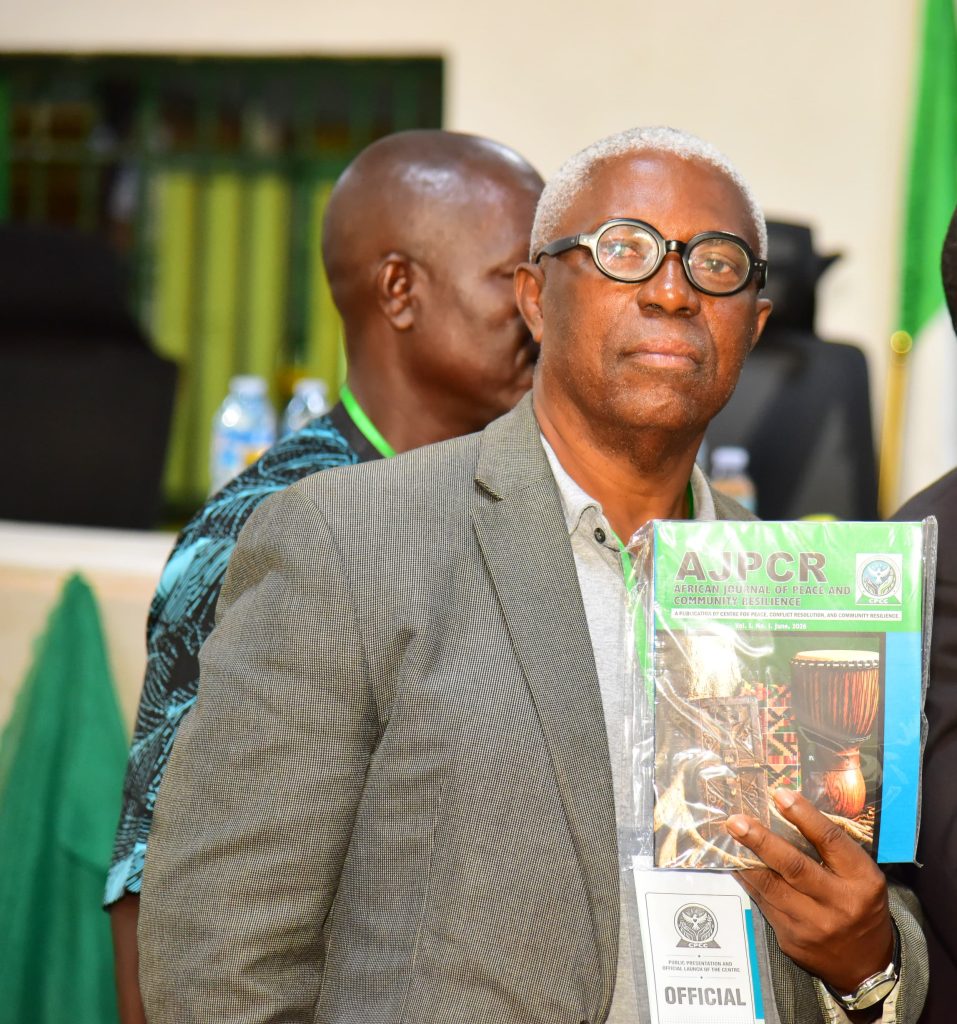
The Centre also unveiled its maiden publication, the African Journal of Peace and Community Resilience, alongside its official website as part of activities marking the inauguration.
Speakers at the forum unanimously agreed that Nigeria’s peace and security challenges require deliberate investments in justice, dialogue, collaboration, tolerance, integrity, and trust.