
Taraba Governor calls for unity in agriculture, education, innovation, trade and cultural development
By Joy Omagha Idam
The story of Nigeria’s diversity is also a story of communities whose histories, cultures and contributions have helped shape the nation.
For the people associated with the ancient Kwararafa Kingdom, that history carries with it a responsibility—not only to preserve a proud heritage, but also to translate the strength of their collective identity into practical contributions to Nigeria’s development.
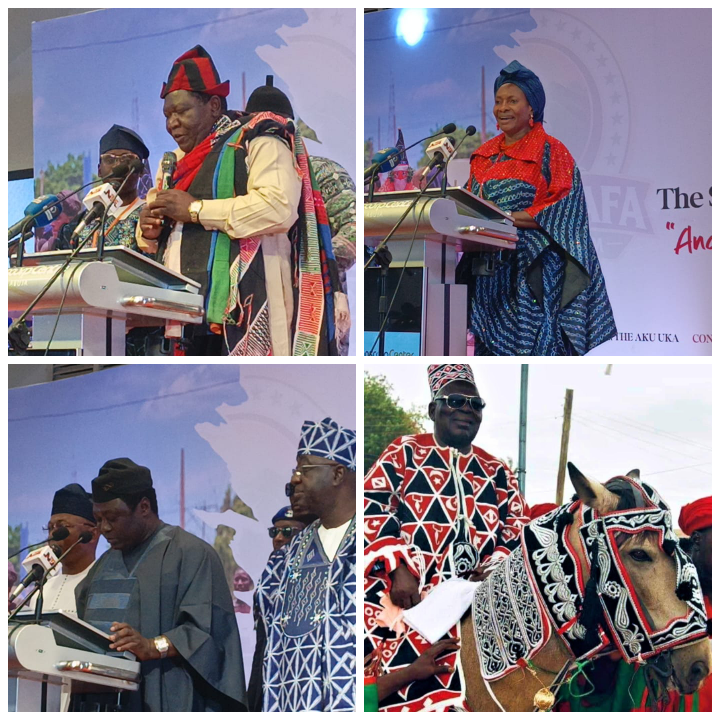
It was against this backdrop that the Governor of Taraba State, Agbu Kefas, challenged Nigerians, particularly the descendants of the Kwararafa Kingdom, to look beyond community and state boundaries and embrace wider collaboration in confronting the nation’s development challenges.
Kefas spoke in Abuja on Saturday at a gathering of descendants of the ancient Kwararafa Kingdom, where he described the gathering as an opportunity to strengthen the people’s contribution to national peace, unity and development.
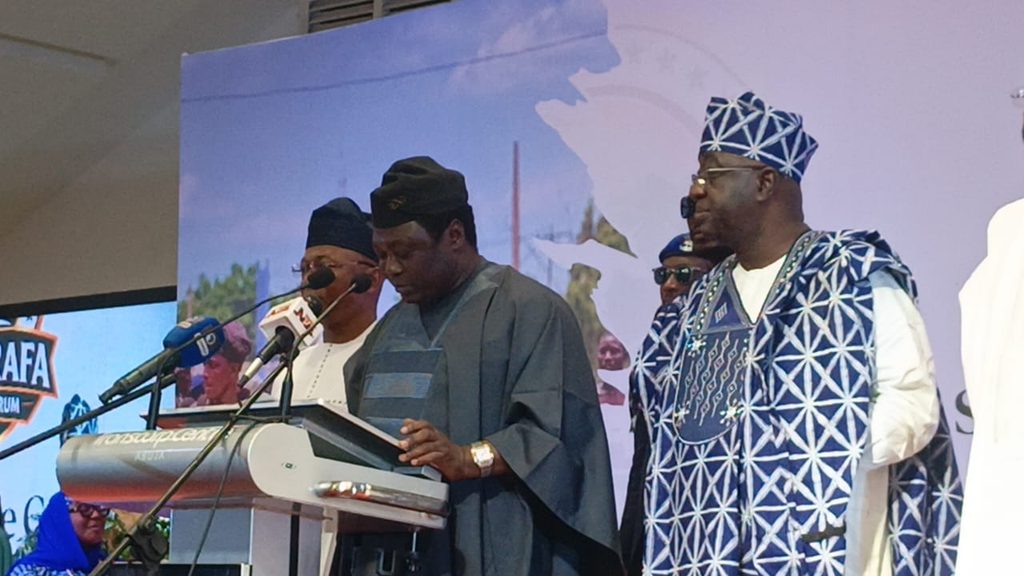
According to him, the Kwararafa people constitute an estimated population of about 20 million spread across more than 22 states of the federation, including the Federal Capital Territory.
Rather than allowing such a large population to remain connected merely by ancestry, the governor urged the people to explore areas where their collective strength could produce tangible economic and social benefits.
His message was essentially a call for a broader vision of community—one capable of connecting agriculture with food security, education with opportunity, skills with employment, and culture with economic development.
From Identity to Action
Kefas noted that Nigeria is facing a combination of challenges that cannot be effectively addressed by isolated communities or individual states.
He identified insecurity, poverty, unemployment, inadequate infrastructure, climate change and limited economic opportunities among the difficulties confronting many Nigerians.
He observed that while many young Nigerians possess education, talent and ambition, opportunities to deploy their abilities remain inadequate.
The governor also drew attention to the difficulties confronting farmers, noting that agricultural producers frequently operate without sufficient access to modern equipment, affordable financing, storage facilities, processing infrastructure and reliable markets.
For him, these challenges make cooperation not simply desirable, but necessary.
“We must expand our perspective beyond our respective communities and states,” Kefas said, stressing the need to identify practical areas where collective action can improve the lives of citizens and contribute to Nigeria’s advancement.
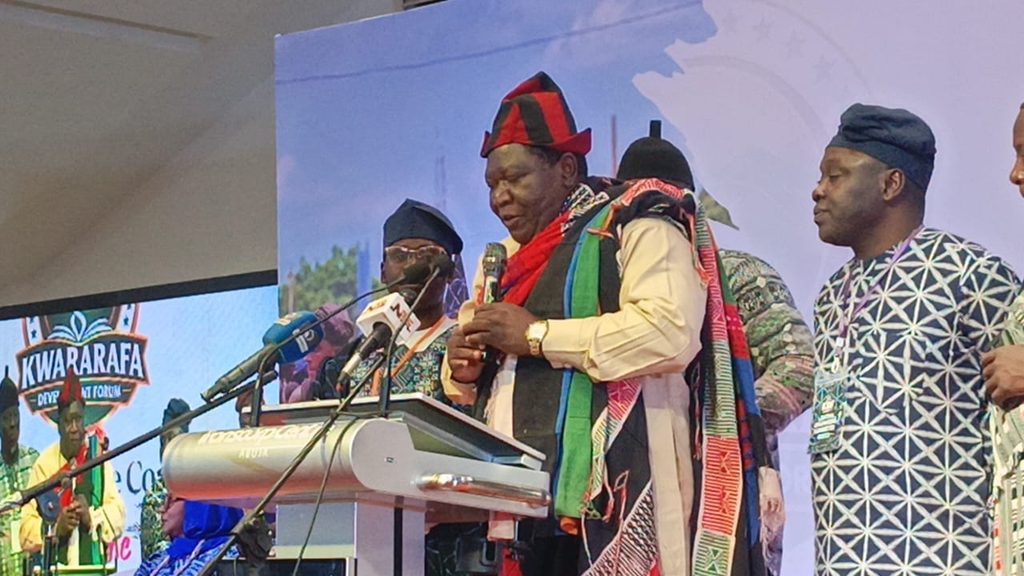
Agriculture and food security, he suggested, should occupy a central position in such cooperation, alongside education, skills development and technological innovation.
He also called for stronger trade and investment links among communities, arguing that economic relationships can create opportunities that extend beyond traditional geographical boundaries.
Turning Heritage Into Opportunity
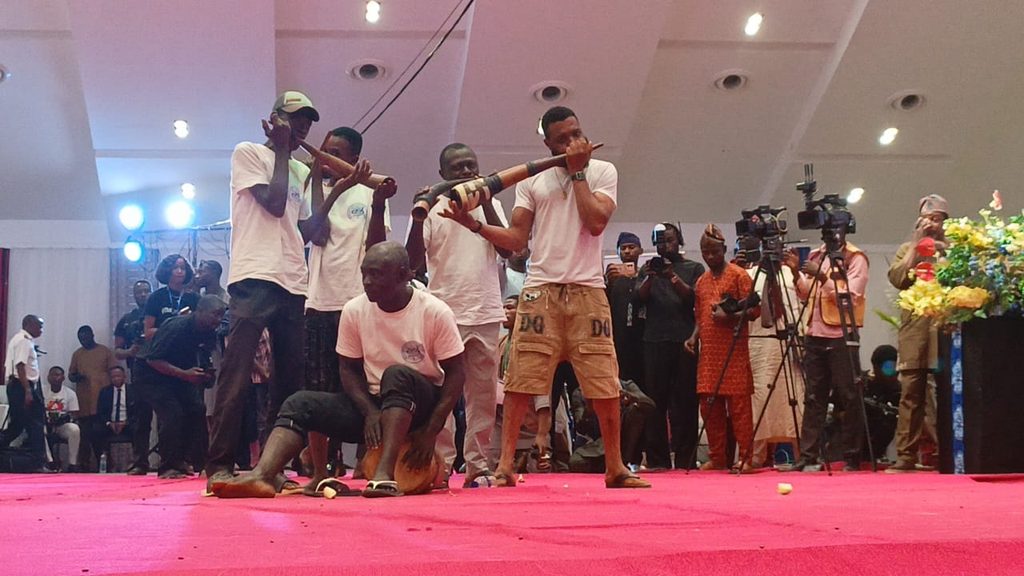
For a people whose identity is deeply connected to a historic kingdom, Kefas also placed considerable emphasis on culture and heritage.
He encouraged the responsible preservation and utilisation of historical and cultural assets as potential drivers of tourism, employment and local economic development.
According to him, the preservation of culture should not be restricted to ceremonies or historical remembrance. Instead, heritage can become part of a broader development strategy capable of creating opportunities for younger generations.
He equally advocated stronger cooperation among traditional institutions, particularly in their roles in promoting peace, security and responsible leadership at the grassroots.
The governor’s position places traditional institutions within a wider national-development framework, where cultural authority can complement modern governance and community development initiatives.
Women and Young People at the Centre
A significant part of the governor’s message was directed towards women and young people.
He maintained that any movement seeking a sustainable future must provide meaningful opportunities for its younger generation, while women must also occupy a central position in development efforts.
“A movement that does not empower its young people has no future,” he declared.
Similarly, he argued that development programmes that exclude women cannot realise their full potential.
The emphasis is significant in a country where young people represent a substantial portion of the population and where women continue to play critical roles in agriculture, commerce, family welfare, entrepreneurship and community life.
For the Kwararafa descendants, the challenge, therefore, is not simply how to celebrate their common history, but how to ensure that the next generation inherits opportunities alongside that history.
The Burden of a Proud History
Kefas further challenged the gathering to reconsider what it means to honour the ancestors of the Kwararafa Kingdom.
He argued that genuine respect for those who came before cannot be measured only by ceremonies, speeches or remembrance.
“The greatest honour we can give our ancestors is not merely to praise them,” he said, “it is to demonstrate the same capacity for organisation, discipline and collective action that made them great.”
That statement effectively shifted the conversation from history to responsibility.
It suggests that heritage should not become a destination but a foundation from which future generations can build.
Kwararafa Contributions to Nigeria
Also speaking at the gathering, Prof. Yakubu Aboki Ochefu, a member of the Central Organising Committee and Director of the Research, Media and Publicity Sub-Committee, highlighted the contributions of Kwararafa people to Nigeria’s development.
He identified areas including agriculture, the armed forces, natural resources and culture as fields in which people of Kwararafa heritage have made significant contributions.
However, he also drew attention to the development difficulties still confronting several communities.
Ochefu pointed to concerns around infrastructure, opportunities and what he described as the marginalisation of some communities in the distribution of state resources.
His intervention reinforced the broader argument emerging from the gathering: that cultural identity must be accompanied by constructive engagement with the country’s development process.
A New Conversation About Unity
The Abuja gathering therefore opened a wider conversation about what collective identity can mean in contemporary Nigeria.
The Kwararafa story, as presented at the event, is not merely about an ancient kingdom or the preservation of ancestral memories. It is also about how people connected by history can cooperate across modern political and geographical boundaries.
For Kefas, such cooperation should produce practical outcomes—better agricultural productivity, stronger businesses, improved education, greater investment, technological innovation, employment opportunities and stronger communities.
The challenge is now to translate the vision into action.
Across Nigeria, communities possess human capital, natural resources, cultural assets and entrepreneurial energy. What is often missing is the scale of coordination required to turn these individual strengths into sustained development.
The Kwararafa gathering in Abuja consequently provided more than an occasion for descendants of a historic kingdom to meet. It presented an opportunity to ask a larger national question: what happens when cultural unity is transformed into purposeful economic and social cooperation?
For the people of Kwararafa heritage, and indeed for Nigerians generally, the answer may lie not simply in looking back at the greatness of the past, but in organising collectively to create opportunities for the future.
As Kefas’ message made clear, the strength of a people is ultimately measured not only by the history they inherit, but by what they choose to build with it.