
By Joy Omagha Idam
There are leadership appointments that fill a vacant position, and there are appointments that arrive with the weight of expectation, responsibility and opportunity.
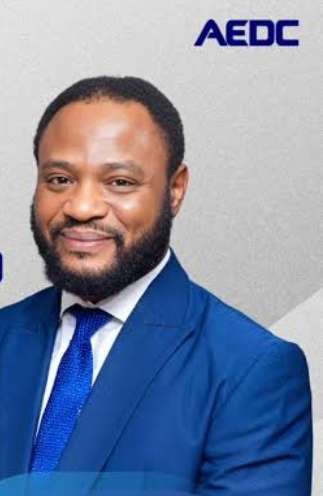
For the Abuja Electricity Distribution Plc. (AEDC), the emergence of Engr. Chijioke Okwuokenye, FNSE, as Managing Director/Chief Executive Officer represents more than a change in the corner office. It is an opportunity to strengthen a utility that sits at the centre of the daily lives of millions of Nigerians.
Electricity is not merely another business.
It is the power behind homes, hospitals, schools, offices, markets, industries and virtually every modern economic activity. When electricity improves, productivity improves. When distribution becomes more reliable, businesses can plan better. When customers receive better service, confidence in the entire power sector grows.
That is why the leadership of AEDC matters.
And this is where Okwuokenye’s professional background and understanding of the power sector become particularly significant.
AEDC’s official profile says the engineer has more than 15 years of experience in the power sector and previously served as Chief Operating Officer, where he was involved in operational efficiency and strategic initiatives. Before joining AEDC, he served as Vice President of Engineering at Konexa, working on energy solutions and profitability.
In my view, this is the kind of experience AEDC requires at this stage of its development: technical competence combined with operational understanding and a clear appreciation of the commercial realities of electricity distribution.
A CEO With His Hands on the Engine Room
One of the strongest arguments in favour of Okwuokenye’s leadership is that he is not coming into AEDC as an outsider trying to understand the company from the beginning.
He has been part of the organisation’s operational architecture.
That matters.
A distribution company is an extremely complex organisation. It has to manage infrastructure, customers, revenue, metering, technical losses, commercial losses, workforce, regulators, communities, security agencies and an increasingly demanding public.
The CEO therefore cannot afford to be detached from the realities confronting the organisation.
He must understand what happens in the field.
He must understand what happens at the substation.
He must understand what customers experience when they make complaints.
He must understand what engineers face when infrastructure is vandalised.
He must understand why revenue collection matters.
And, importantly, he must understand that every improvement in the system eventually has to translate into a better experience for the customer.
This is where Okwuokenye’s operational experience gives him an important advantage.
Beyond Megawatts: The Customer Must Remain King
AEDC itself has articulated a vision of becoming a world-class utility providing power 24/7, while identifying improved service quality, accessibility, timely information, fair and transparent billing and stronger customer-community relationships among its brand promises.
These are ambitious promises.
But ambitious promises require equally ambitious execution.
The Nigerian electricity consumer is no longer interested in excuses. Customers want to know when power will come, why it goes off, what they are being billed for and how quickly their complaints will be addressed.
That makes customer service a central component of Okwuokenye’s leadership assignment.
A successful AEDC under his watch should therefore not only be measured by technical statistics. It should also be measured by the confidence of its customers.
The real question should increasingly become:
Are customers experiencing a difference?
If the answer is yes, then leadership is working.
The War Against Electricity Theft
Perhaps one of the biggest challenges facing distribution companies is the vicious cycle created by electricity theft, meter bypass, infrastructure vandalism and poor revenue recovery.
Okwuokenye has been outspoken on the issue.
In an August 2026 interview, he identified electricity theft, including meter bypass and tampering, as major contributors to commercial and technical losses in AEDC’s network. He also explained that such losses reduce the revenue available for maintaining and expanding electricity infrastructure and can ultimately affect service quality and investment.
This is an important conversation.
The Nigerian public often discusses electricity from the perspective of supply and billing, but the sustainability of the distribution system requires a functioning economic model.
AEDC cannot continuously invest in transformers, feeders, substations, meters and other infrastructure if a significant portion of the electricity distributed cannot be properly accounted for and paid for.
The solution, however, must combine enforcement with education, technology and fairness.
Customers must be encouraged to reject illegal connections.
Communities must protect electricity infrastructure.
Security agencies must support the fight against vandalism.
AEDC must continue improving metering and customer service.
And where customers have genuine complaints, those complaints must be addressed quickly and transparently.
That is how trust is built.
Infrastructure: The Quiet Revolution
Perhaps the most encouraging aspect of AEDC’s current direction is the emphasis on network improvement.
The company has announced projects involving new 33kV lines, feeder improvements, load transfers and other interventions designed to strengthen infrastructure, reduce outages and improve reliability.
These projects may not always make sensational headlines.
But they are the foundations upon which reliable electricity is built.
A transformer replacement may not trend on social media.
A strengthened feeder may not become a national talking point.
A redesigned network may not attract the attention of politicians.
Yet these are the interventions that ultimately determine whether a community enjoys stable electricity.
Leadership, therefore, should be judged not only by speeches but by infrastructure delivered, systems improved and problems solved.
Partnership, Not Confrontation
Another area where Okwuokenye’s leadership deserves attention is stakeholder engagement.
The electricity sector cannot succeed through the efforts of the distribution company alone.
AEDC needs customers.
It needs state governments.
It needs traditional institutions.
It needs communities.
It needs manufacturers and businesses.
It needs regulators.
It needs security agencies.
And it needs its own employees to believe in the transformation.
Recent engagements by AEDC with manufacturers and security authorities demonstrate the importance of this collaborative approach. The company has been engaging stakeholders on issues ranging from industrial electricity needs to the protection of critical infrastructure.
That is the right direction.
For instance, protecting electricity infrastructure should not be regarded as AEDC’s responsibility alone.
A vandalised transformer does not belong only to AEDC. It belongs, in a broader sense, to the community that depends on it.
A damaged electricity line affects businesses, families, hospitals and schools.
Therefore, communities must become partners in protecting the network.
Investing in People
Leadership is ultimately about people.
It is therefore significant that AEDC has also been placing emphasis on recognising employee performance.
In July 2026, the company announced promotions for 547 employees and step increments for another 579 following its 2025 performance appraisal exercise. The exercise was presented as part of AEDC’s effort to build a high-performing, customer-centric organisation.
This is important because an organisation cannot deliver world-class service with demotivated employees.
The engineers climbing poles in difficult weather conditions, customer service personnel dealing with complaints, technical teams responding to faults and administrative staff keeping the system running are all part of the AEDC story.
A CEO who understands this will appreciate that employee welfare, training, recognition and accountability are not peripheral matters.
They are business strategy.
The Okwuokenye Opportunity
For me, the most important question surrounding Okwuokenye’s leadership is not whether he can maintain AEDC.
It is whether he can help transform it.
AEDC operates across the Federal Capital Territory as well as Kogi, Niger and Nasarawa States, making its footprint strategically important to Nigeria’s economic and administrative life.
The company therefore needs a leadership philosophy that goes beyond keeping the lights on.
It needs innovation.
It needs better data.
It needs stronger customer communication.
It needs aggressive metering.
It needs improved revenue assurance.
It needs infrastructure investment.
It needs stronger partnerships.
It needs a culture where accountability is not negotiable.
And above all, it needs leadership that understands that electricity distribution is ultimately about people and national development.
Okwuokenye has an opportunity to make his tenure a reference point in the evolution of AEDC.
He can become the CEO who helped move the company from managing challenges to systematically solving them.
He can help strengthen the relationship between AEDC and its customers.
He can help reposition the organisation as a modern utility driven by technology, accountability and service.
And he can demonstrate that technical expertise and compassionate leadership do not have to exist separately.
The Bigger Picture
Nigeria’s electricity challenge will not disappear overnight.
There will still be generation constraints.
There will still be transmission challenges.
There will still be vandalism.
There will still be commercial losses.
There will still be customer complaints.
But leadership determines how an organisation responds to those challenges.
The true test of Okwuokenye’s leadership will therefore not be the absence of problems.
It will be how quickly, intelligently and transparently AEDC responds to them.
For the millions of residents and businesses within AEDC’s franchise area, the expectation is simple:
Give us reliable electricity. Give us honest communication. Give us responsive customer service. Give us a distribution company we can trust.
That is the mandate.
And that is why the leadership of Engr. Chijioke Okwuokenye matters.
At a time when Nigeria is searching for practical solutions to its energy challenges, AEDC has an opportunity to demonstrate what purposeful leadership can achieve.
Okwuokenye has the professional background.
He has operational experience.
He has the platform.
Now, the nation will be watching the execution.
Because in the final analysis, the success of an electricity company is not measured from the boardroom.
It is measured in the homes that stay lit, the businesses that remain productive, the hospitals that continue working and the communities that can confidently say: the power is getting better.
And that is the future AEDC should be working to deliver.