
By Joy Omagha Idam
A Liberian member of the ECOWAS Parliament, Ms. Moima Briggs-Mensah, has called for far-reaching institutional reforms that would give the regional legislature greater authority over policies, budgets and decisions affecting citizens across West Africa.
Briggs-Mensah made the call on the sidelines of the 2026 Second Extraordinary Session of the ECOWAS Parliament and the Second 2026 Parliamentary Seminar in Accra, Ghana, where issues of climate change, environmental degradation, displacement and regional development came under discussion.
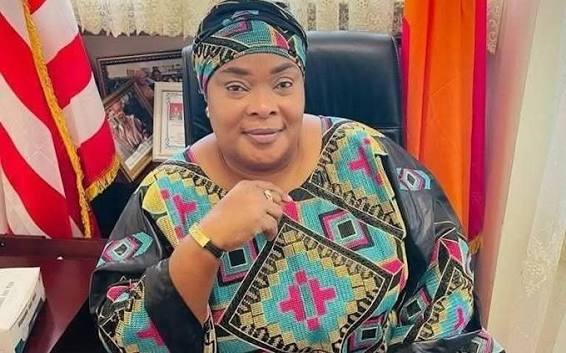
She argued that the current advisory status of the ECOWAS Parliament limits the ability of elected parliamentarians to translate their deliberations into concrete action.
According to her, lawmakers who represent constituents across member states should have a stronger voice in shaping regional policies and approving financial decisions.
“I don’t think you can have parliament members that are elected by the country and their constituents come and sit there and just be advisable to a few people that are just appointed by one president,” she said.
Briggs-Mensah consequently advocated a review of the institutional framework governing the regional legislature to enable Parliament to adopt legislation, participate more directly in budget processes and exercise greater influence over the implementation of its decisions.
“For me, I think we should have a reform in the ECOWAS Parliament, that whatever we adopt here, that even the budget should come from us also to know how it’s been done, and we should pass it also,” she said.
She maintained that it was discouraging for parliamentarians to spend time deliberating on pressing issues affecting West African citizens when the implementation of their recommendations ultimately depended on other regional institutions.
“We should have outstanding rules that ECOWAS Parliament, that we can adopt issues, that we can even pass the budget. We also can approve the budget,” she added.
Climate Action Must Move Beyond Deliberations
The Liberian lawmaker also urged ECOWAS to develop common regional laws and coordinated policies to tackle climate change, environmental degradation and climate-related displacement.
While describing the parliamentary seminar as useful in deepening understanding of the challenges confronting the region, she stressed that the real measure of success would be what happens after the discussions.
“The learning curve was good. I prayed that the implementation aspect by ECOWAS… ECOWAS should have a generic laws that are going to govern the region,” she said.
Briggs-Mensah called for regional action plans that would complement international commitments on climate change and land degradation, alongside mechanisms for mobilising resources for communities and countries affected by climate-related disasters.
“The seminar is good, but the implementation is what matters,” she said.
She identified women and children among those particularly exposed to the consequences of climate change, especially during floods, migration and disruptions to agriculture and cross-border commerce.
According to her, women engaged in the movement of agricultural produce and other goods could suffer substantial losses when flooding cuts off roads and border routes.
“When you look at migration, when you look at flood issues… at the end of the day, you end up losing, because maybe it’s spoiled, or you have to throw it away,” she said.
She further noted that unpredictable weather patterns could leave farmers struggling to recover investments made in fertilisers, seeds and other agricultural inputs when adverse conditions result in poor harvests.
Briggs-Mensah therefore advocated preventive intervention rather than waiting until disasters occur before governments begin emergency responses.
“We shouldn’t wait for it to happen, then we start to do quick impacts, or start to do a disaster origin needs. But we should come up with a full plan on how we are going to protect these people,” she said.
Call for Greater Investment in Women-Led Businesses
The parliamentarian, who is also involved with the ECOWAS Female Parliamentarians Association (ECO-FEPA), called for stronger regional support for women entrepreneurs, particularly those with businesses capable of participating in regional and international trade.
She said discussions during an ECO-FEPA masterclass had highlighted the quality and potential of products being produced by women across the region, including shea butter and agricultural commodities.
Briggs-Mensah urged ECOWAS member states to first strengthen intra-regional trade by creating opportunities for women to sell their products across West Africa.
“The first thing, we should start with ourselves. Try to export within the region,” she said.
She argued that products produced in one ECOWAS member state should be encouraged, promoted and consumed within the region before entrepreneurs are pushed to compete in distant international markets.
“If you are selling something, and you are not a consumer, people do not really buy into it,” she said.
She identified access to affordable finance as one of the major challenges confronting women-owned businesses.
According to her, high commercial lending rates can place significant pressure on small enterprises, particularly businesses that struggle to meet repayment obligations.
She proposed the establishment of dedicated ECOWAS financing arrangements, including grants and concessional loans, for women-led cooperatives and enterprises seeking to increase production and expand into new markets.
“If you have a grant from ECOWAS, to improve your business as a cooperative, as a body, it helps,” she said.
She also suggested that regional gender-focused programmes could incorporate dedicated funding windows for women involved in production, processing and export activities.
Such interventions, she explained, could help entrepreneurs improve the quality of their products, packaging and access to markets.
Parliament Should Carry Citizens’ Voices
Briggs-Mensah also emphasised the importance of the ECOWAS Parliament’s direct connection with citizens.
She said elected parliamentarians were in a position to better understand the difficulties facing communities because of their regular interaction with constituents.
“We are the direct representation of the people. We know the people’s problem,” she said.
She questioned the extent to which regional policymakers outside Parliament directly engage with women involved in cross-border commerce and understand the challenges they encounter.
“When was the last time the minister of council or the head of state sat and listened to women? How they are striving to do the export,” she asked.
According to her, the ECOWAS Parliament should function as an effective bridge between citizens and regional institutions by ensuring that concerns raised by communities are reflected in policy discussions and decisions.
Adapt Policies to West African Realities
The Liberian legislator cautioned ECOWAS against simply transplanting policies from other parts of the world without considering the realities of West African countries.
Using experiences from countries such as China and the United States as examples, she noted that nations generally formulate policies around their own economic, social and institutional circumstances.
“We need to adopt what we want for Africa,” she said.
She urged regional policymakers to study successful practices elsewhere, identify those that could be useful and adapt them to the realities of ECOWAS member states.
For Briggs-Mensah, the ultimate value of parliamentary engagement should be measured by tangible results for the people.
“For me, I like to see an outcome,” she said.
She recalled that ECOWAS had organised training programmes and other engagements where recommendations and possible interventions were developed, but stressed the need to ensure that such outcomes move beyond discussions to implementation.
She therefore reiterated her call for stronger institutional rules capable of ensuring that decisions reached through parliamentary processes receive appropriate attention from relevant ECOWAS institutions.
“Whatever we do here is compelling to the commission, to the body to be made sure it passes,” she said.
Briggs-Mensah maintained that a more empowered ECOWAS Parliament, combined with stronger implementation mechanisms and targeted support for women entrepreneurs, would enable regional institutions to respond more effectively to the economic, environmental and social challenges confronting West African communities.
Appreciation to Bridget Onochie and Sandra Chukwugekwu for compiling the Report.