
By Joy Omagha Idam
In every democratic society governed by the rule of law, justice is measured not only by the outcome of legal proceedings but also by the fairness of the process that leads to those outcomes. It is this fundamental principle that has brought the suspension of Chief Mike Ozekhome, SAN, by the Legal Practitioners’ Privileges Committee (LPPC) into sharp public focus.
The issue extends beyond one individual. It raises profound questions about due process, professional discipline, constitutional rights, and the delicate balance between preserving institutional integrity and protecting the rights of those accused of wrongdoing.
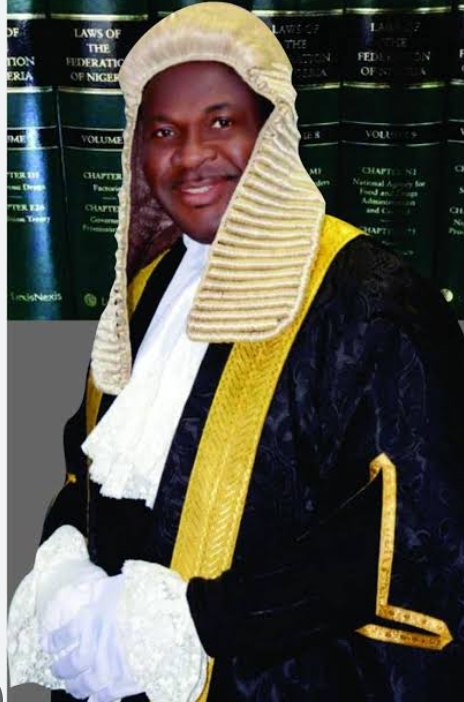
Chief Mike Ozekhome is not an ordinary legal practitioner. Over several decades, he has established himself as one of Nigeria’s most prominent constitutional lawyers, a Senior Advocate of Nigeria, and a vocal defender of civil liberties. His contributions to legal scholarship and constitutional advocacy have earned him national and international recognition.
Precisely because of his stature, any disciplinary action involving him inevitably attracts public attention. Yet public interest should never overshadow the constitutional guarantees available to every Nigerian citizen.
At the heart of this debate lies one of the oldest and most respected principles of justice: every person is presumed innocent until proven guilty by a court of competent jurisdiction.
Section 36(5) of the Constitution of the Federal Republic of Nigeria is unambiguous. It provides that every individual charged with a criminal offence shall be presumed innocent until proven guilty. This safeguard is not a technicality; it is the cornerstone of every civilized legal system.
The LPPC has explained that Chief Ozekhome’s suspension is merely an interim administrative measure intended to preserve the integrity and prestige of the rank of Senior Advocate of Nigeria pending the conclusion of disciplinary and criminal proceedings.
That explanation deserves consideration. Every professional body has both the authority and responsibility to protect the credibility of its highest honours.
However, the question many legal observers continue to ask is whether an interim suspension imposed before a final determination of guilt risks creating the public perception that punishment has already begun before the law has taken its full course.
For the average citizen, the distinction between “interim suspension” and “disciplinary sanction” may appear largely academic. In practical terms, both carry reputational consequences that may be difficult to reverse even if the affected individual is eventually exonerated.
This is why the doctrine of the presumption of innocence must never become merely symbolic.
History teaches that allegations, regardless of how serious they may appear at first, do not always end in convictions. Courts exist precisely because facts must be tested, evidence examined, and both sides afforded equal opportunity to present their case.
Justice demands patience.
The legal profession, perhaps more than any other institution, should remain a model of procedural fairness. Lawyers are officers of the court. Their professional bodies must therefore demonstrate the very constitutional values they are sworn to uphold.
Protecting the integrity of the SAN rank is undeniably important. The title represents excellence, learning, integrity, and distinguished service to the legal profession. Any conduct capable of diminishing that honour deserves careful scrutiny.
Yet institutional integrity is strengthened—not weakened—when disciplinary processes are seen to be fair, transparent, and consistent with constitutional guarantees.
The challenge before the LPPC is therefore not simply about enforcing professional standards. It is about ensuring that the process itself reflects the ideals of justice that the legal profession represents.
One of the enduring principles of natural justice is audi alteram partem—hear the other side. Equally enduring is the principle that he who alleges must prove.
These principles exist to protect everyone, not merely those who eventually prove innocent, but also society itself from the dangers of arbitrary judgment.
Today it may be Chief Mike Ozekhome. Tomorrow it could be another distinguished member of the Bar—or indeed any Nigerian citizen.
The precedents established today will shape the standards applied tomorrow.
This is why restraint, fairness, and strict adherence to due process remain indispensable.
None of this should be interpreted as suggesting that allegations of professional misconduct ought to be ignored or that disciplinary bodies should remain inactive while investigations continue.
Rather, it is an appeal for proportionality.
Professional accountability and constitutional rights are not competing values; they should reinforce each other. Institutions preserve their credibility not only by acting decisively but also by ensuring that every action is demonstrably fair.
Ultimately, whether Chief Mike Ozekhome is vindicated or found culpable should be determined through established legal and disciplinary processes—not by public opinion or premature assumptions.
Justice is never served by replacing the presumption of innocence with the presumption of guilt.
As Nigerians continue to follow this matter, the hope must remain that the final outcome will reaffirm not only the integrity of the legal profession but also the supremacy of the Constitution and the timeless principle that no person should suffer the full weight of punishment before guilt has been lawfully established.
For when due process is protected, justice itself is protected.