
By Sharon Akuboh and Aishatu Ibrahim
«“The journey began in 1989 with women demanding a voice. At 37, the challenge is to use that voice to build a legacy that will still be speaking 37 years from now.”» From a bold idea in 1989 to a national platform for women journalists.
In September 1989, a group of Nigerian women journalists decided they had waited long enough.
Journalism was overwhelmingly male-dominated. Women were reporting from the field, working behind microphones, writing stories, producing programmes and occupying editorial desks, yet their professional contributions did not always translate into equal recognition, opportunities or leadership.
So they organised.
Their idea gave birth to the Nigeria Association of Women Journalists (NAWOJ)—an organisation that would grow into a national platform for women journalists and an important voice on issues affecting women and society.
Thirty-seven years later, that bold idea has become an enduring institution.
A BOLD BEGINNING
According to the history of NAWOJ published by the Nigeria Union of Journalists (NUJ), the initiative was led by Dr. (Mrs.) Brenda Akpan, who became its pioneer National President. The founding women also received the support of gender-sensitive male journalists during the tenure of George Izobo, then National President of the NUJ.
That support was significant.
The emergence of NAWOJ was not about creating a divide between male and female journalists. It was about recognising that women needed a dedicated platform to confront professional challenges, strengthen their capacity and increase their participation in journalism.
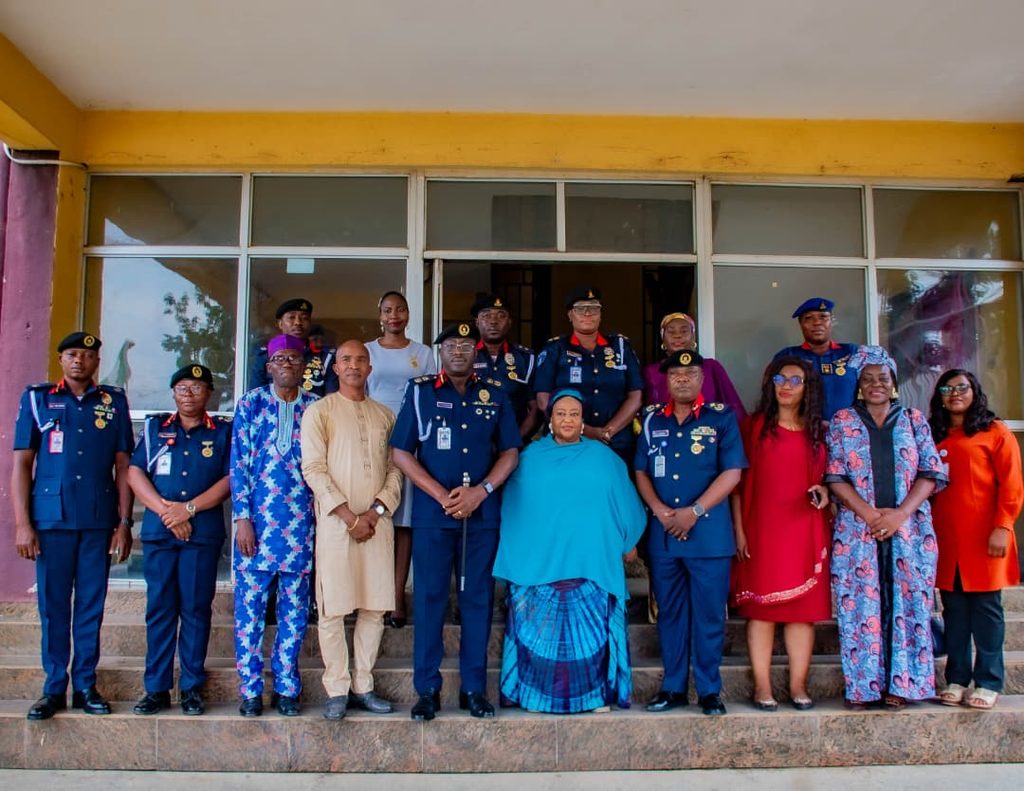
NAWOJ subsequently became an affiliate of the NUJ.
Its pioneer leadership comprised Brenda Akpan as President and Bimbo Coker as Secretary.
From that modest beginning grew a movement that would spread across Nigeria, connecting women journalists and creating opportunities for training, networking, mentorship, leadership and advocacy.
The pioneers may not have known exactly how far their idea would travel.
But they understood something fundamental:
«When women organise around a common purpose, their collective voice becomes difficult to ignore.»
MORE THAN AN ASSOCIATION
NAWOJ’s significance cannot be measured simply by the number of women who have passed through its structures.
Its deeper impact lies in the confidence, professional networks and opportunities it has helped create.
For decades, women journalists have used the platform to exchange experiences, develop their skills, seek leadership opportunities and bring attention to issues that might otherwise remain outside the national conversation.
A stronger woman journalist does more than report the news.
She can challenge stereotypes.
She can amplify the voices of women and children.
She can report from communities affected by insecurity, poverty and displacement.
She can hold institutions to account.
She can become an editor, broadcaster, publisher, media executive, policy advocate or community leader.
And, perhaps most importantly, she can become a mentor to the woman coming behind her.
That multiplier effect is part of NAWOJ’s enduring legacy.
FROM THE NEWSROOM TO SOCIETY
The work of women journalists has never been confined to the newsroom.
Their reporting frequently places them at the centre of conversations about domestic violence, child protection, insecurity, poverty, displacement, health and the rights of vulnerable communities.
As a result, NAWOJ’s mission has evolved alongside the profession.
It has increasingly become a platform not only for professional development, but also for advocacy and social engagement.
Its story is therefore larger than journalism.
It is a story about women’s leadership, professional courage, social responsibility and the power of the media to influence society.
THE WOMEN WHO KEPT THE FLAME ALIVE
Every enduring institution has people who carry its vision from one generation to another.
Following Brenda Akpan’s pioneering leadership, NAWOJ passed through several generations of women who contributed to its growth. Among those recorded in its leadership history are Hannatu Musa, Moji Makanjuola, Kande Daniel, Evelyn Onyilo, Toro Oladapo, Fatimah Abdulkareem, Asabe Baba Nahaya, Ifeyinwa Omowole and Ladi Bala, among others.
Each administration had its own challenges, priorities and achievements.
But the central idea remained: women journalists deserved a strong platform from which to participate fully in the profession and society.
That continuity matters.
Institutions are not built in a single tenure. One generation lays the foundation; another strengthens it; another introduces reforms; and another takes the vision further.
That is how a movement becomes an institution.
A NEW ERA, A BIGGER RESPONSIBILITY
Thirty-seven years after its founding, NAWOJ stands at another important point in its journey.
The challenges facing women journalists today are different from those confronting the pioneers of 1989, but the need for solidarity, professional development, visibility and leadership remains just as important.
The media landscape has been transformed by technology. News now travels across digital platforms in seconds. Social media has blurred the boundaries between traditional journalism and citizen reporting, while artificial intelligence is beginning to reshape how information is gathered, produced and consumed.
For NAWOJ, the task is therefore no longer simply to create space for women in journalism. It is to ensure that women are equipped to lead, innovate and remain relevant in the journalism of the future.
That means investing in continuous training, mentorship, digital and multimedia skills, ethical journalism, entrepreneurial development and the protection and welfare of women journalists.
It also means building an institution strong enough to serve its members beyond individual administrations and ensuring that every generation leaves the association stronger than it found it.
The future of NAWOJ must be measured not only by how many women belong to it, but by how many women it empowers to lead, how many voices it helps amplify and how much influence those voices have in shaping society.
The pioneers opened the door.
The responsibility of the present generation is to keep it open—and make the doorway wider for those coming behind.
BUILDING A HOME FOR THE FUTURE
One of the notable developments in NAWOJ’s current journey is the progress towards a permanent national secretariat.
The acquisition of land and securing of a Certificate of Occupancy represent more than a property transaction. They symbolise permanence.
For an organisation founded in 1989, the prospect of having a permanent institutional home is a powerful statement: the vision of the pioneers has endured.
The secretariat can ultimately become more than offices. It can serve as a training centre, mentorship hub, conference facility and professional resource centre.
It can become a place where a young woman journalist walks through the doors and sees something more than a building.
She sees a legacy.
She sees what women before her built.
And she sees what she, too, can build.
LOOKING BEYOND 37
Anniversaries are moments for celebration, but they are also moments for asking important questions.
What should NAWOJ look like at 50?
What kind of journalism will women practise in another 37 years?
How many women will lead major media organisations?
How many will own newspapers, television stations, radio platforms and digital media companies?
How prepared will women journalists be for artificial intelligence and the rapidly changing information ecosystem?
And how effectively will NAWOJ continue to create pathways for young women, particularly those from underserved communities?
The answers will depend on how boldly the association invests in its future.
At 37, the goal should not simply be to become bigger.
It should be to become stronger, more innovative, more professionally relevant and more institutionally sustainable.
THE NEXT GENERATION
Perhaps the greatest tribute to the pioneers is not another anniversary celebration.
It is a young woman entering journalism today and discovering that she does not have to walk the journey alone.
She should find mentors.
She should find training.
She should find opportunities.
She should find a pathway to leadership.
She should understand that journalism can be more than a job.
It can be a platform from which she can influence conversations, transform communities and build institutions.
She can report.
She can investigate.
She can publish.
She can lead.
She can own.
She can innovate.
She can build.
That is the promise of NAWOJ.
THE FLAME MUST BURN BRIGHTER
Thirty-seven years ago, Brenda Akpan and her contemporaries refused to accept the limitations of their era.
They organised.
They created.
They built.
Successive generations carried the torch forward.
Today, another generation holds it.
The responsibility now is not merely to preserve the flame, but to make it burn brighter.
Because the story of NAWOJ is ultimately not just about an association.
It is about what happens when women decide to make their voices heard—and then use those voices to create opportunities for others.
The journey began in 1989 with women demanding a voice.
At 37, the challenge is to use that voice to build a legacy that will still be speaking 37 years from now.
The women are still reporting.
Still telling the stories.
Still challenging the status quo.
Still building bridges.
And still proving that when women journalists stand together, their voices can help shape not only the media, but the nation itself.