
Russia and North Korea Open Historic Road Link as Moscow–Pyongyang Alliance Enters a New Era
From trade and tourism to military logistics, the new Tumen River crossing is emerging as a powerful symbol of a rapidly changing world order
By Joy Omagha Idam
There are bridges that connect towns, bridges that connect cities, and bridges that connect countries.
And then there are bridges that appear at a defining moment in history and begin to symbolize something much bigger than concrete, steel and asphalt.
The newly inaugurated road bridge linking Russia and North Korea belongs to the latter category.
Stretching across the Tumen River, the new crossing has given Russia and North Korea their first dedicated road connection and created another physical link between two countries whose relationship has undergone a remarkable transformation in recent years.
Officially, the message from Moscow and Pyongyang is about trade, transportation, tourism, economic cooperation and people-to-people contact.
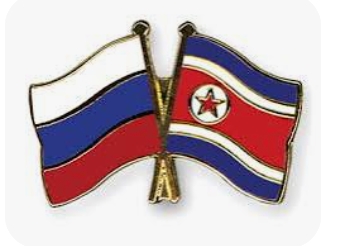
But beneath the ceremony and diplomatic language lies a much bigger story.
The bridge has opened at a time when Russia and North Korea are moving closer than they have been in decades—politically, economically and militarily.
And that is why governments and security analysts around the world are watching this new road very carefully.
A Bridge Across the Tumen
The approximately one-kilometre, two-lane bridge connects Russia’s Far Eastern settlement of Khasan with the North Korean border town of Tumangang.
It crosses the Tumen River, a waterway that forms part of the border between Russia, North Korea and China.
The project represents a significant addition to the transportation infrastructure linking the two countries.
For decades, the principal land connection between Russia and North Korea has been the railway crossing known as the Friendship Bridge, constructed in the 1950s.
The new road bridge changes that equation.
Road transportation offers a different level of flexibility from rail. Trucks, buses and other vehicles can potentially move goods and people directly between the two countries, creating opportunities for increased commercial activity.
The crossing has been named the Yakov Novichenko Bridge, after a Soviet soldier who, according to North Korean accounts, saved the life of North Korea’s founder, Kim Il-sung.
Its inauguration was therefore not merely an infrastructure ceremony. It was also an opportunity for Moscow and Pyongyang to celebrate a relationship that both sides increasingly describe in terms of friendship, strategic partnership and shared interests.
Moscow’s Economic Argument
Russia has strongly emphasised the commercial potential of the bridge.
Moscow says improved transportation links can increase trade, tourism and cooperation in areas ranging from the economy and science to technology and culture.
The road connection could make it easier for Russian tourists to visit North Korea while opening additional channels for North Korean goods and workers to reach Russia.
For Russia’s Far East, where Moscow has been seeking greater economic development and stronger links with neighbouring Asian countries, the project also fits into a broader strategy of increasing regional connectivity.
The geographical location is important.
Russia’s Far Eastern territories are thousands of kilometres from Moscow but lie close to the growing economic centres of East Asia.
The bridge could therefore become another component of Russia’s attempt to orient more of its economic activity towards Asia.
This matters even more because Moscow’s relationship with many Western countries has deteriorated dramatically since the beginning of the Ukraine war.
Western sanctions have restricted Russia’s access to numerous traditional markets, financial institutions and supply chains.
Russia has consequently increased its focus on relationships with countries such as China, India and other partners in Asia, Africa, the Middle East and the Global South.
North Korea is now becoming part of that wider picture.
But Is It Really Just About Trade?
This is where the story becomes more complicated.
A bridge between two neighbouring countries would ordinarily be viewed primarily as an economic project.
But the Russia–North Korea relationship cannot be separated from the war in Ukraine.
Since Russia launched its full-scale invasion of Ukraine in February 2022, North Korea has increasingly aligned itself with Moscow.
Pyongyang has provided political backing for Russia and has been accused by Western governments and international observers of supplying Moscow with substantial quantities of ammunition and other military assistance.
North Korean troops have also reportedly been deployed to Russia in support of its war effort.
Moscow and Pyongyang have simultaneously strengthened their formal relationship.
In 2024, Russian President Vladimir Putin and North Korean leader Kim Jong-un signed a comprehensive strategic partnership agreement.
The agreement represented a significant shift in relations and included provisions for mutual assistance.
The relationship has continued to develop since then.
Against this background, the opening of a new road corridor naturally raises questions.
Could the bridge facilitate military logistics?
Could it eventually provide another route for the movement of military personnel, equipment and supplies?
Could it make the movement of people and materials between the two countries easier to conceal or accelerate?
These questions are being asked internationally.
But there is an important distinction between strategic potential and confirmed military use.
There is currently no evidence that the bridge was publicly inaugurated as a military facility.
Both Moscow and Pyongyang have presented it as an economic and transportation project.
Nevertheless, infrastructure can serve multiple purposes.
A road built for commercial transportation can, under different circumstances, also provide logistical capacity.
That is precisely why strategic analysts are paying attention.
A New Route for a Growing Alliance
The timing is perhaps as important as the bridge itself.
Russia is attempting to withstand prolonged Western pressure while maintaining its military campaign in Ukraine.
North Korea, meanwhile, remains heavily sanctioned and internationally isolated because of its nuclear weapons and ballistic missile programmes.
Both countries therefore have powerful incentives to deepen alternative partnerships.
For Russia, North Korea can provide military and political support.
For North Korea, Russia offers an important international partner with diplomatic influence, technological capabilities and economic resources.
The bridge gives that partnership a physical dimension.
It creates another route through which the two countries can interact.
And in geopolitics, physical connectivity can matter enormously.
Railways, roads, ports, pipelines and energy corridors often become instruments of national strategy because they determine how quickly goods, resources and people can move.
The Tumen crossing could eventually become part of a broader network connecting Russia’s Far East to the Korean Peninsula and, indirectly, the wider Asian economy.
China Watches From Next Door
There is another important player in this story: China.
The Tumen River region sits close to the borders of Russia, North Korea and China.
China has historically been North Korea’s most important economic and diplomatic partner, while Russia’s relationship with Beijing has also expanded dramatically.
The emergence of stronger Russia–North Korea ties therefore takes place within a broader Asian strategic environment in which Moscow and Beijing have developed increasingly close relations.
The new bridge does not replace China’s role.
But it adds another dimension to North Korea’s external relationships.
For Pyongyang, maintaining relationships with both China and Russia provides strategic room to manoeuvre.
For Moscow, deeper relations with North Korea strengthen its presence in Northeast Asia.
And for Beijing, developments involving its two neighbours are naturally of strategic interest.
The Ukraine Connection
Perhaps the biggest reason Western governments are watching the bridge is Ukraine.
Kyiv and its Western partners have repeatedly accused North Korea of helping Russia sustain its war effort.
Ukraine has also warned that cooperation between Moscow and Pyongyang could extend beyond ammunition and personnel into technology and other forms of military assistance.
If the new bridge increases the volume and speed of cross-border movement, it could potentially become another component of Russia’s logistical network.
That does not mean every truck crossing the bridge will carry military equipment.
It means that the existence of an additional road connection gives both governments greater flexibility.
And flexibility is valuable during wartime.
The Bigger Global Picture
The bridge also tells a story about the changing international system.
For much of the post-Cold War period, the United States and its Western allies occupied a dominant position in global politics.
Today, that dominance is being challenged by the emergence of stronger regional powers and alternative networks.
Russia is deepening relationships across Asia, Africa and the Middle East.
China is expanding its economic and diplomatic reach.
India is pursuing strategic autonomy while maintaining relationships with competing global powers.
Countries across Africa and the Global South are increasingly seeking to diversify their economic and diplomatic partnerships.
The Russia–North Korea bridge fits into this broader transformation.
It is a small physical structure compared with the enormous highways, ports and infrastructure projects being constructed around the world.
But its geopolitical symbolism is enormous.
It demonstrates how countries under Western pressure can create new channels of connectivity and cooperation.
What Does It Mean for Africa?
At first glance, the Tumen River may appear a very long way from Abuja, Lagos or Accra.
But Nigeria and other African countries should not dismiss developments in Northeast Asia as distant affairs.
The global economy is interconnected.
A major shift in relations among Russia, China, India, North Korea, the United States and European countries can affect energy prices, food security, shipping routes, commodity markets, defence partnerships and diplomatic alignments around the world.
Nigeria has important relationships with Russia, China and India.
It is also a major African economy with growing interest in infrastructure, energy, technology, defence cooperation and international investment.
The lesson for Nigerian policymakers is clear: global power is becoming increasingly interconnected and increasingly multipolar.
Nigeria must therefore continue to watch developments beyond its immediate neighbourhood.
The country’s foreign policy and economic strategy cannot be designed solely around traditional Western partners.
At the same time, Nigeria must avoid becoming entangled in conflicts among major powers.
The country’s strongest position remains one that protects its national interest, expands economic opportunities and maintains constructive relationships across competing geopolitical blocs.
A Bridge, But Also a Message
The Russia–North Korea road bridge may eventually become a busy commercial corridor.
It may carry tourists, trucks, agricultural products and manufactured goods.
It may help develop Russia’s Far East and stimulate economic activity in North Korea.
But its significance today goes beyond traffic statistics.
It is a symbol of two countries drawing closer at a time when the world itself is being reorganised.
It represents the practical side of a partnership that has already moved from diplomatic friendship towards strategic cooperation.
Whether the bridge ultimately becomes a major trade route, a tourism corridor, a logistical artery—or a combination of all three—will depend on what happens next.
For now, however, one thing is unmistakable.
Russia and North Korea have built more than a bridge across the Tumen River. They have built another connection in an emerging geopolitical network that could influence the balance of power far beyond their borders.
And as the first vehicles begin to cross, the world will be watching—not simply to see what travels across the bridge, but to understand where this new road may ultimately lead.