
By Halima Jibril, Abuja
Abuja — February 4 is globally observed as World Cancer Day, a day set aside by the United Nations to raise awareness about cancer, promote prevention, and celebrate survivors. The 2026 theme, “United by Unique,” highlights the importance of people-centered cancer care while recognizing every patient’s unique journey.
Marking the occasion in Abuja, Project Pink Blue, a leading cancer awareness non-governmental organisation, organized a 10-kilometer awareness walk tagged “Choke Cancer.” The event forms part of activities commemorating the NGO’s 10th anniversary of advocacy for improved access, treatment, and funding for cancer patients in Nigeria.
Participants carried placards bearing messages such as “Cancer Treatment is Expensive” and “Should Patients Buy Food or Medication?” — drawing attention to the rising cost of care and the financial burden on affected families.
Rising Cases, High Cost of Treatment
Medical experts at the event listed common cancers affecting Nigerians to include prostate, breast, cervical, gastrointestinal, colon, and rectal cancers. They identified causes such as genetics, environmental exposure, and lifestyle factors including poor diet and lack of exercise.
Free medical screenings were offered during the walk, including breast and cervical cancer checks, hepatitis B testing, blood sugar tests, eye examinations, and body vital assessments. Medics and nutrition experts also provided guidance on healthy feeding habits for patients.
Cancer survivors and those currently undergoing treatment shared emotional testimonies, citing financial constraints, high transportation costs, poverty worsened by fuel subsidy removal, and insecurity as major barriers to accessing treatment — especially for patients traveling from rural communities to urban cancer centres.
Many revealed they spend millions of naira from diagnosis through treatment, which can last between five to ten years.
Kosi Ugboaja, a breast cancer survivor and volunteer with Project Pink Blue, recounted being diagnosed in 2022 at age 39 at a private hospital in Abuja before commencing treatment at the Federal Medical Centre, Abuja.
She remains on a five-year treatment regimen and expressed hope of being declared cancer-free at the end of the process. She appealed for greater government intervention, noting that many patients unable to afford medication are dying in large numbers.
Also speaking was U.S.-based Nigerian, Mrs. Ify Nwabukwu, a breast cancer survivor and Executive Director of the Africa Women Cancer Awareness Association, a co-sponsor of the event. Now cancer-free, she continues to advocate for increased government support for cancer care.
In a notable international participation, Ms. Mbekeke Matovu, a gastrointestinal cancer survivor from Kampala, Uganda, attended the walk after connecting with the organisers online. Diagnosed in 2024, she travels to Nairobi, Kenya every three months for free treatment due to limited access in her home country. She shared experiences of stigmatization in her community and expressed her desire to establish a community-based cancer support initiative in Uganda.
The event attracted participation from various NGOs, including the Network of People Impacted by Cancer and the Network of People Living with Disabilities. Bikers, skaters, volunteers, and advocacy groups added colour and energy to the walk.
Outstanding media practitioners, volunteers, and partners were recognized for their contributions to the NGO’s decade-long impact.
Symposium Focuses on Cancer, Conflict and Insecurity.
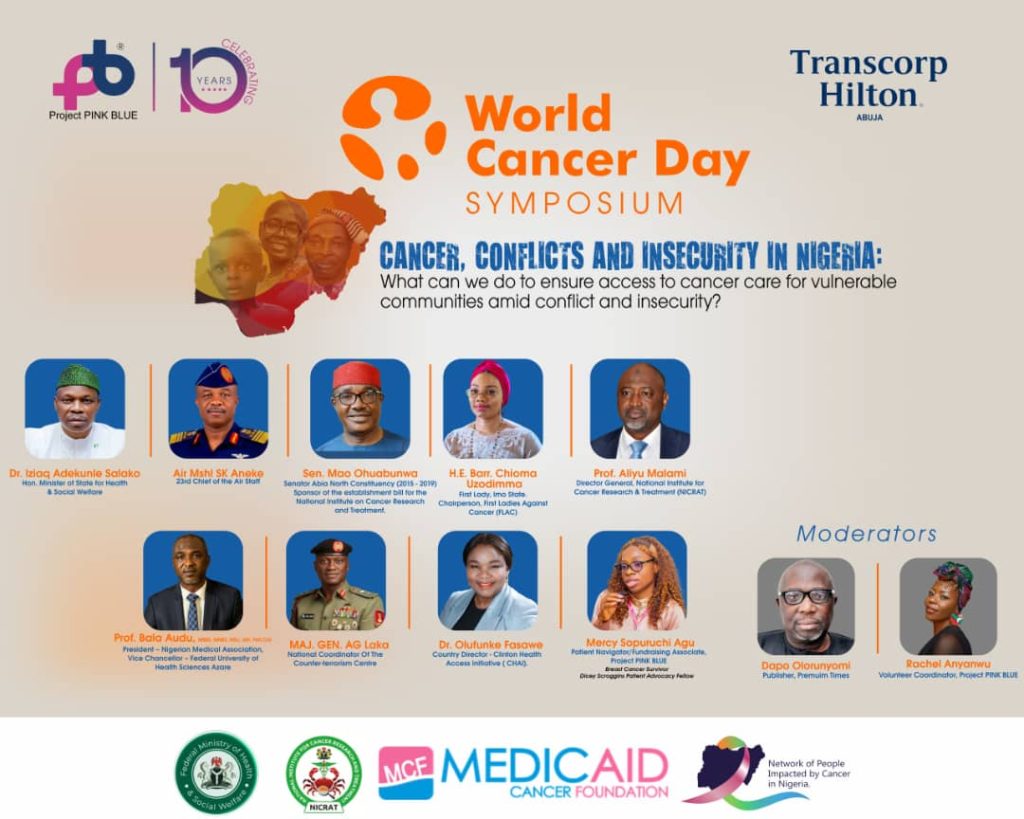
In a related development, Project Pink Blue convened a high-level symposium in Abuja themed “Cancer, Conflicts and Insecurity in Nigeria.” Stakeholders examined how insecurity hampers cancer patients’ access to treatment, particularly those traveling from rural areas.
Among dignitaries present were the Honourable Minister of State for Health and Social Welfare, Dr. Isiaq Salako; the Director General of the National Institute for Cancer Research and Treatment; representatives of the Nigerian Medical Association; security officials; health development partners; civil society organisations; and members of the media.
Discussions centered on the need for increased health sector funding, improved budget releases, and expansion of modern cancer treatment centres across geopolitical zones. The Ministry of Health disclosed that cancer centres in Katsina, Maiduguri, and Sokoto have been upgraded with modern equipment and are operational, while others are expected to commence services soon.
Stakeholders noted that although approximately 15 percent of the national budget is allocated to health, actual releases remain inadequate to meet growing demands.
Participants also emphasized early detection and prompt treatment as lifesaving measures, urging Nigerians to avoid denial at the onset of symptoms. Side effects of treatment such as hair loss, skin complexion changes, weak bones, and nausea were highlighted, alongside the need to tackle stigmatization, which can negatively impact patients’ mental health.
Ambassador Godwin Kagior of Project Pink Blue acknowledged the organisation’s fundraising challenges amid increasing requests for treatment support. He reaffirmed the NGO’s commitment to research, patient navigation, psychological support, and sustained advocacy.
As cancer cases continue to rise annually, stakeholders agreed that stronger collaboration, increased funding, and improved access to care are critical steps toward reducing the burden of the disease in Nigeria.
Early detection saves lives, participants reiterated — and united action remains the strongest weapon against cancer.
