
By Joy Omagha Idam
The political atmosphere in Rivers State remains tense, uncertain, and deeply divided as the power struggle between Governor Siminalayi Fubara and the Minister of the Federal Capital Territory, Nyesom Wike, continues to shape the future of the oil-rich state.
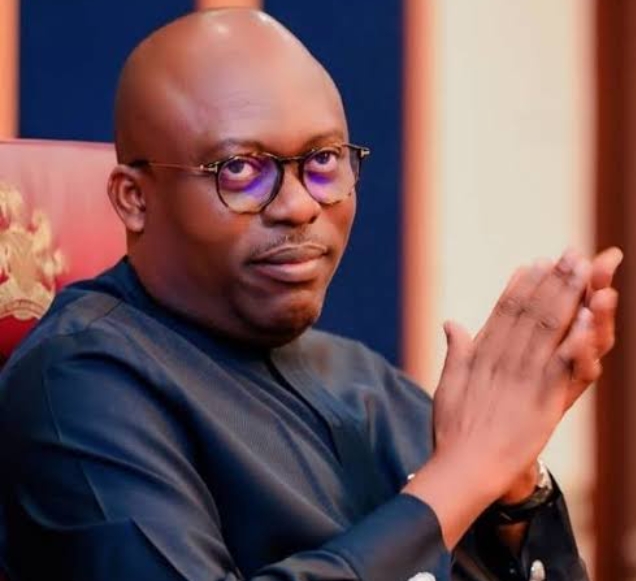
At the center of the debate is the dissolution of influential grassroots support groups that once stood firmly behind Governor Fubara’s administration. Among them was the Simplified Movement, led by Evans Bipi, which emerged as one of the strongest grassroots political structures supporting the Governor across the 23 local government areas of the state.
Before its dissolution, the movement served as a major mobilization force, defending the Governor’s leadership style and promoting his people-oriented policies. It became widely recognized for its loyalty to Governor Fubara and its ability to rally support at the grassroots level against forces perceived to be working against the administration.
In June 2025, Governor Fubara dissolved the Simplified Movement and other affiliated support groups as part of broader efforts aimed at promoting peace, reconciliation, and political unity in Rivers State. The Simplicity Movement and support structures associated with Sogboma Jackrich were also dissolved and later reorganized under the Rivers Grassroots Movement (RGM).
While the move was presented as a step toward reconciliation, many political observers now believe it may have unintentionally weakened the Governor’s grassroots political base, creating room for rival political interests to dominate the political space.
To many supporters of the Governor, the dissolved groups had become powerful structures capable of resisting external political influence. Their removal, critics argue, created an opening for new political alignments allegedly linked to Abuja-based interests.
Questions continue to arise over the extent of influence allegedly maintained by the FCT Minister over the political affairs of Rivers State despite the presence of a constitutionally elected governor. There are also growing speculations surrounding the alleged positioning of political figures such as George Kelly and Kingsley Chinda ahead of the 2027 governorship election.
Political analysts say the current crisis reflects a broader struggle over political control, succession, and influence ahead of future elections.
The tension intensified further following recent developments within the All Progressives Congress in Rivers State.
As of May 2026, the party reportedly screened 98 House of Assembly aspirants, clearing only 33 while disqualifying 65. Reports indicate that many aspirants believed to be aligned with Governor Fubara were disqualified, while lawmakers loyal to the FCT Minister were cleared.
To many observers, the development further exposes the deepening political divide within the state.
Beyond party politics, ethnic considerations have also become part of the conversation. Rivers State is home to more than 23 indigenous ethnic nationalities, making power rotation and inclusion highly sensitive issues.
There are increasing concerns among some political stakeholders over alleged attempts to produce another Ikwerre governor in 2027 following the administrations of Rotimi Amaechi and Nyesom Wike, both of whom are of Ikwerre extraction and governed the state consecutively from 2007 to 2023.
For many citizens from other ethnic groups, the debate is no longer only about politics but also about fairness, representation, and inclusion in governance.
Amid these tensions, many citizens have also questioned the perceived silence of the Ijaw nation despite Governor Fubara’s political challenges. Some argue that the long-standing slogan, “An injury to one is an injury to all,” should inspire stronger solidarity in defense of democratic governance and political stability in the state.
Supporters of Governor Fubara maintain that the Governor has consistently demonstrated calmness, restraint, and commitment to peace despite mounting political pressure. However, critics believe that his conciliatory approach is increasingly being interpreted as weakness by political opponents determined to sustain conflict and dominance.
To many Rivers people, Governor Fubara represents a departure from confrontational politics and a transition toward a more inclusive and peaceful leadership style.
Yet the uncertainty surrounding the state’s political future continues to grow.
There are also mounting complaints regarding alleged marginalization in federal appointments involving Rivers indigenes. Some supporters of the Governor claim that political opportunities and appointments increasingly favor individuals loyal to the FCT Minister, while those associated with Governor Fubara are allegedly sidelined.
As political tensions rise, many residents fear that prolonged rivalry and unresolved power struggles could threaten peace, stability, and development in the state if urgent steps are not taken.
Many political observers believe that the Federal Government, particularly President Bola Ahmed Tinubu, must play a neutral and fatherly role in resolving the crisis by encouraging dialogue, cooperation, and respect for democratic institutions.
For many citizens, the priority should not be political supremacy but peace, governance, and development.
In the end, Rivers people are asking one pressing question:
What does the future truly hold for Rivers State?