
By Nkechinyere Ewa
The Ebonyi State Local Government Service Commission, in collaboration with Identris System Limited, has commenced the 2026 compulsory bio-data verification and onboarding of staff across the 13 local government areas and 64 development centres in the state.
The exercise, which began in Abakaliki Local Government Area, is aimed at identifying genuine workers, eliminating ghost employees and creating room for fresh employment into the local government system.
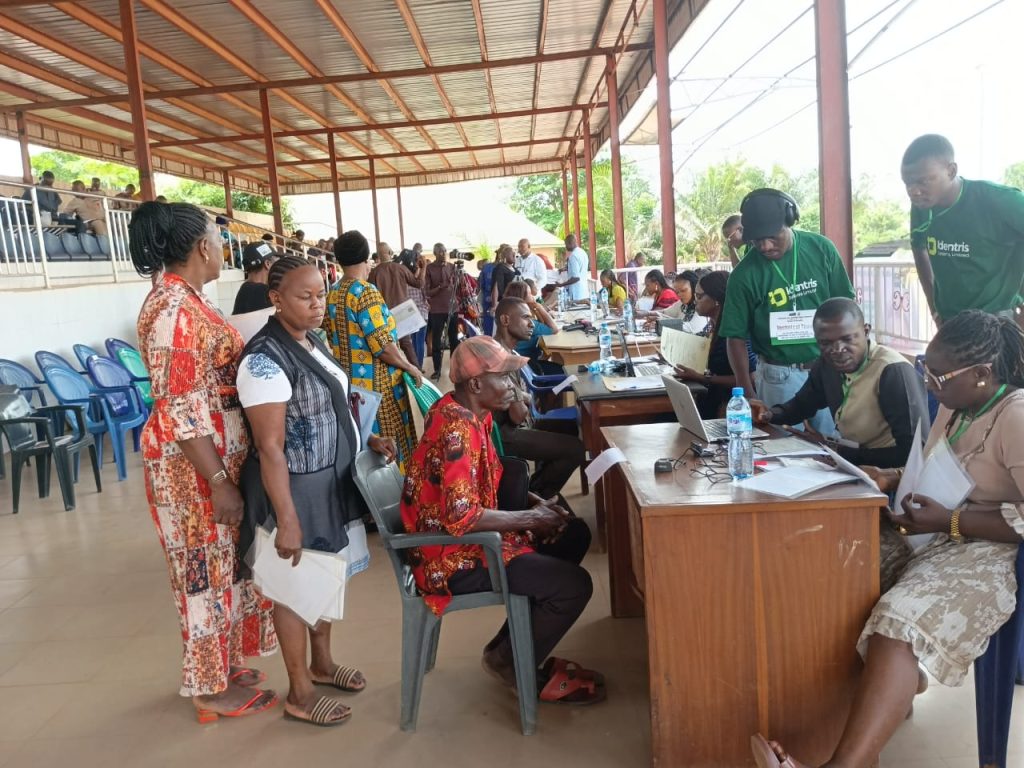
Chairman of the Local Government Service Commission, Chief Romanus Nwasumu, said the exercise became necessary because authorities could no longer ascertain the exact number of workers in the system.
“We are in charge of recruitment and monitoring of local government staff, but unfortunately, we do not know the exact number of staff in the system,” Nwasumu said.
“It is embarrassing for a local government chairman not to know how many workers he pays salaries to. That is why this exercise is necessary.”

He explained that the verification would involve digital onboarding of workers into a centralized portal, warning that any staff member not captured in the system would no longer be recognized as a worker.
“At the end of this exercise, if your name is not in the portal of the Local Government Service Commission, you are no longer a staff,” he warned.
Nwasumu commended Governor Francis Ogbonna Nwifuru for approving the exercise and pledged that the commission would carry out the process without compromise.
Flagging off the exercise, the Commissioner for Local Government and Chieftaincy Matters, Chief Stephen Uchenna Igwe, said the state government became concerned because the wage bill kept increasing despite mass retirements in the local government system.
“More than 70 percent of workers in the local government system have retired, yet the salary wage bill keeps increasing,” Igwe said.
“We discovered that some workers are no longer in the state, while some are even abroad receiving salaries. This exercise will help us identify those genuinely working and those who are not.”
He urged workers and their relatives outside the state to return for the verification, stressing that there would be no exceptions for absentees.
Commissioner One and Chairman of the Technical Team, Architect Augustine Nwechera, said previous verification exercises failed because they were paper-based and vulnerable to manipulation.
According to him, the current exercise involves electronic capturing of workers’ data, making it difficult for records to be altered.
“Every verified worker is being digitally captured into the commission’s website with valid identification documents,” he said.
“Once your data is onboarded, it becomes difficult for anybody to tamper with it.”
Nwechera added that the commission would continue periodic monitoring after the exercise to track absentee workers who might temporarily return for verification.
Secretary of the Commission, Chidozie Igwe, said the exercise would help government reduce the bloated wage bill and create room for employment of qualified youths.
“There are vacancies in the local government system, but government cannot employ because the wage bill remains high,” he said.
“If this exercise is properly implemented, it will create room for employment.”
Commissioner Two of the Commission, Monday Nwigbo, also said the exercise would help government identify genuine workers and stop payment to absentee employees.
Chairman of Abakaliki Local Government Area, Chief Stephen Ebere Nwogba, described the exercise as a step in the right direction.
“Some people are overseas collecting salaries while others come to work every day,” Nwogba said.
“As far as I am concerned, that is criminal.”
He called for similar verification exercises to be extended to other government establishments to eliminate payroll leakages across the state.