
By Nkechinyere Ewa
For three painful months, classrooms in Amasiri community, in Afikpo Local Government Area of Ebonyi State, remained deserted. Following a clampdown by the Government of Ebonyi State. Amasiri had before the governor clampdown enjoyed Peace and Calm. Reason we were shocked at the drastic decision.
There was unwarranted military seige and total imprisonment of Amasiri community simply based on accusation and speculation that indigenes of Amasiri were involved in killing people in neighboring communities.
School uniforms disappeared from the streets. Exercise books gathered dust. Pupils and students fled with their families while gunfire, fear and uncertainty replaced the sounds of learning and laughter.

Today, schools in the once troubled community have reopened following the lifting of the curfew imposed by the Ebonyi State Government after the communal rift involving Amasiri, Akpoha and Okporojo, Oso communities in Afikpo and Edda Local Government Areas.
The age long conflict, which purportedly led to the beheading of four persons by unknown persons and several other deaths, made the government to impose a curfew on Amasiri on January 31, 2026. It is important to Note that Amasiri was judged without trial nor fair hearing. There was no investigations.
The restriction was lifted last Tuesday after a State Security Council meeting presided over by Governor Francis Nwifuru at the Government House, Centenary City, Abakaliki, with heads of security agencies in attendance.
It is important to Note that Amasiri has piles of petitions yet to be attended to. Amasiri lost so many people during the Lockdown. Where is the justice to Amasiri.
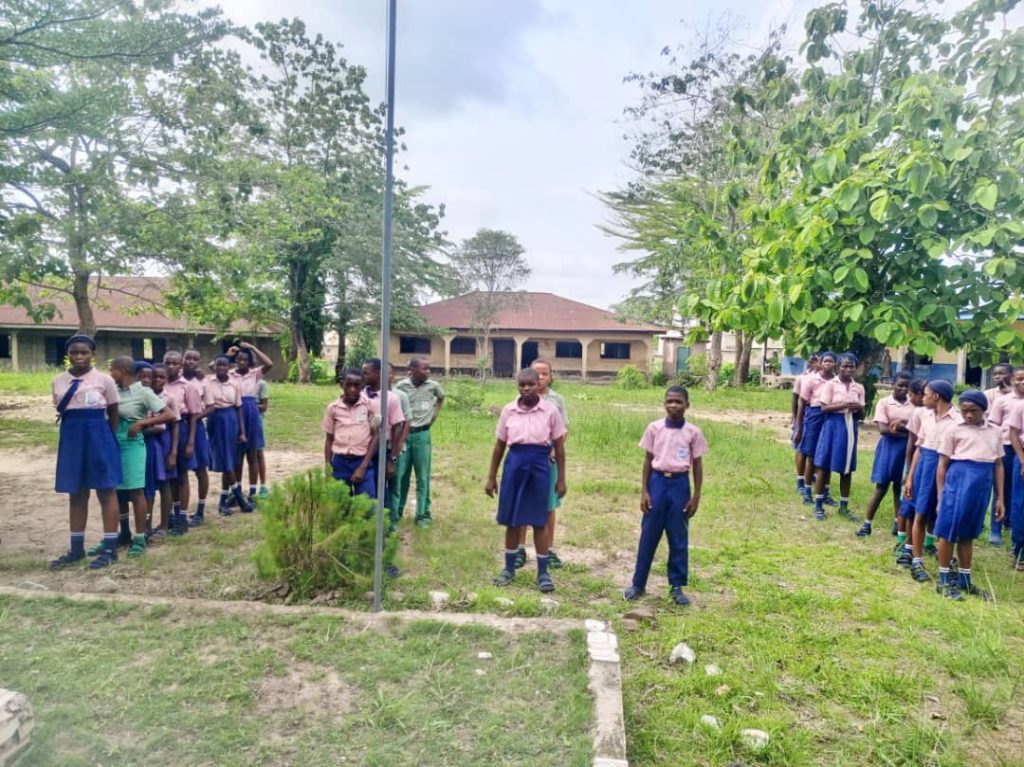
But while schools have reopened, the scars left behind by the violence remain visible across the community.
When reporters visited Amasiri on Monday, many classrooms were still nearly empty. In some schools, only a handful of students had returned, while several teachers were yet to resume duties.
At Ekuma Ubaghala Memorial Secondary School, students spoke emotionally about the hardship they endured during the lockdown.
An SS3 student, Idam Ugochi, said the crisis almost destroyed her dream of sitting for the West African Senior School Certificate Examination (WAEC).
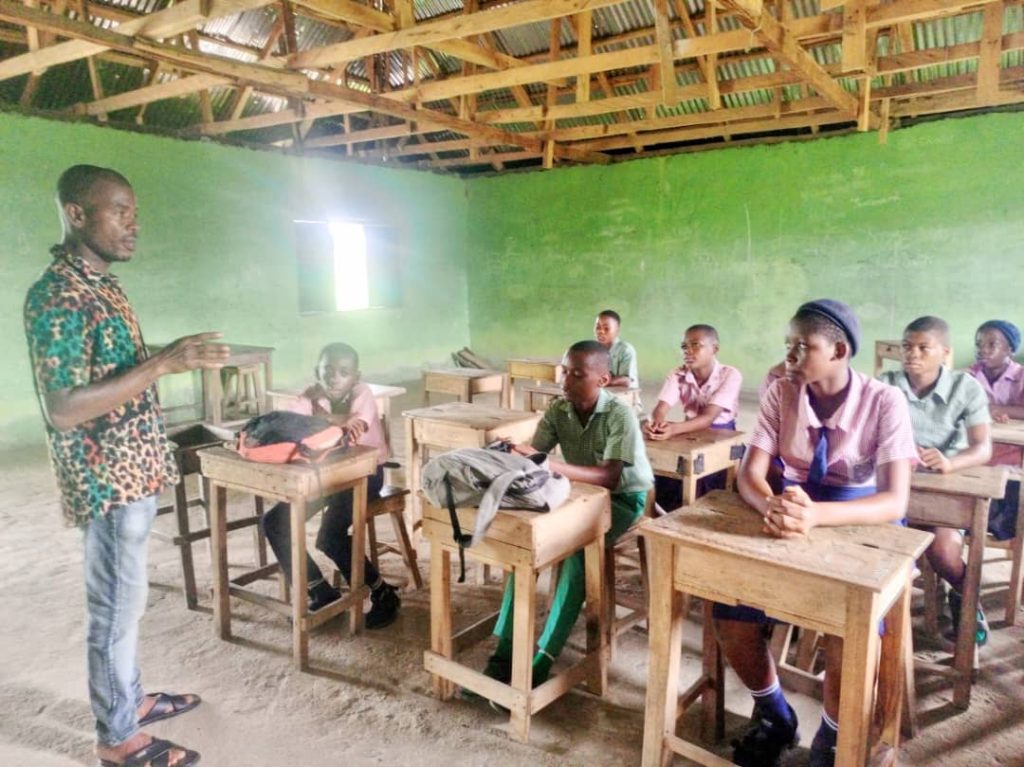
“We suffered much during the lockdown, we saw hell. We were starving and there was no food to eat and we needed to write our WAEC,” she said.
According to her, candidates had to trek daily under the scorching sun to Ehugbo, where they registered for the examination.
“We had to be trekking to Ehugbo every day under hot sun just to write our WAEC,” she added.
Although she expressed relief over the reopening of schools, Ugochi said the community could not fully heal while many residents arrested during the crisis remained in prison custody.
“I feel happy that the curfew has been lifted but my joy is not complete because we need our people who are in prison custody over the crisis to be released,” she said.
She noted that the continued detention of many residents had crippled economic activities in the community.
“Our markets are still not functioning and many shops remain locked because those arrested have not been released,” she lamented.
She also narrated the emotional burden facing families whose relatives remain behind bars. With no visible date of their release.
“My uncle is one of those in prison custody and because of his detention, my grandmother is seriously sick. Government should kindly release them so that life can return to normal in this community,” she appealed.
For younger students, the shutdown also came with enormous academic setbacks.
A JSS3 student of the school, Okpara Daniel, said many students missed registration deadlines for key examinations because schools remained closed for months.
“Our schools were shut down during the curfew and we stopped learning completely.
“We didn’t even register for our Junior NECO and other exams we were supposed to write as JSS3 students. It is now that we are trying to register,” he said.
Daniel explained that students had already lost three weeks of the third term before the curfew was lifted.
“We are happy the curfew has been lifted because we would have missed the whole term if it continued,” he added.
At the administrative level, teachers are now battling to salvage what remains of the academic session.
The Junior Principal of Ekumaubaghala Memorial Secondary School, Okpara Agatha, described the situation as devastating.
“We thank God that the curfew has been lifted and students are gradually returning,” she said.
According to her, the prolonged shutdown caused students to lose an entire term while preparations for Junior NECO were severely disrupted.
“The students lost second term completely and this is already the third week of third term.
“What we are doing now is running around to ensure they register for Junior NECO,” she explained.
Agatha also spoke about the wider impact of the violence on the community.
“We lost many lives and businesses during the curfew. Everywhere is still empty and many things are yet to return to normal,” she lamented.
The most striking scene, however, was at Amasiri Central School.
Only four pupils all from the same family were seen in the entire school compound.
They were Enyiukpo Uchenna, a Primary 6 pupil, Enyiukpo Chinonso and Enyiukpo Chimaobi, both in Primary 3, and Enyiukpo Michael, a Primary 1 pupil.
Speaking softly inside the quiet school premises, Enyiukpo Uchenna said most pupils were still displaced alongside their parents.
“I and my three siblings are the only pupils in this school now. Other children are still staying in places they ran to with their parents because of the curfew,” he said.
According to him, many teachers had not returned despite the reopening directive.
“Our teachers have not also come back but we are waiting for them to return and start teaching us,” he added.
The young pupil said they missed both first and second term examinations because of the prolonged closure.
“We missed two terms and have already missed three weeks of this term too.
“We want to start learning because we have missed a lot in our studies. Our teachers and classmates should come back,” he appealed.
Though the lifting of the curfew has brought relief to residents, Amasiri still bears the heavy weight of loss, displacement and uncertainty.
For many families, reopening schools is only the first step in rebuilding a community shattered by violence.