
From Education and Skills Development to Healthcare, Technology and Trade, India’s Partnership with Nigeria Continues to Create Opportunities
By Joy Omagha Idam
For more than six decades, Nigeria and India have maintained a relationship built on friendship, mutual respect and expanding cooperation. Today, that relationship is increasingly reflected not only in diplomatic engagements but also in practical programmes that touch education, human-capital development, healthcare, technology, agriculture, business and people-to-people relations.
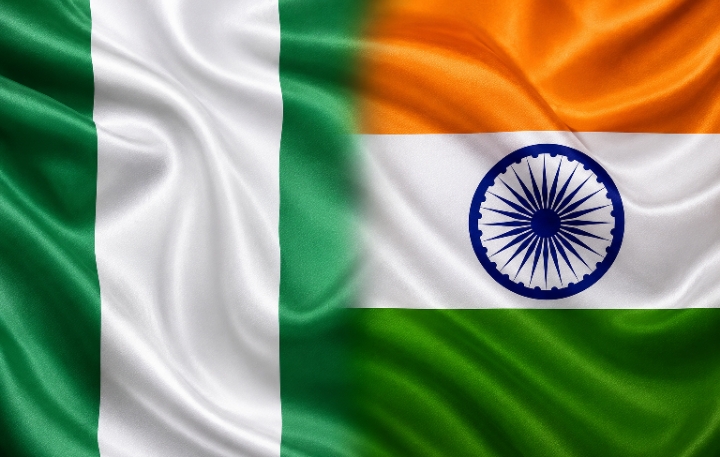
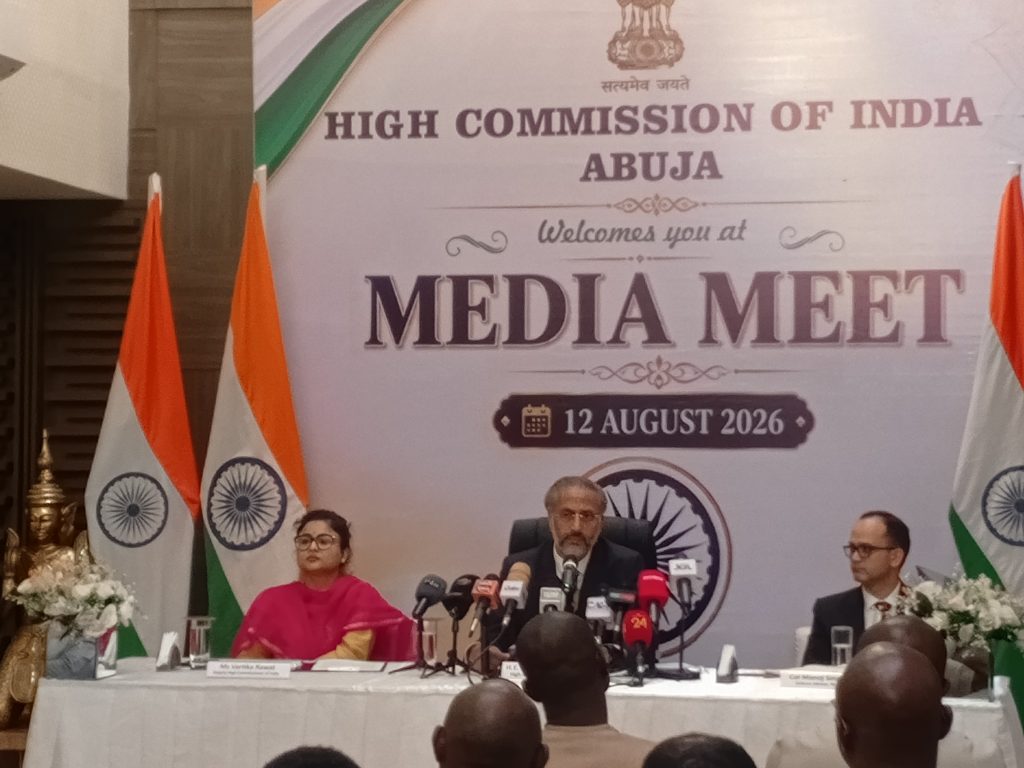
At the centre of this growing partnership is the High Commission of India in Nigeria, working alongside the Nigerian Government and other stakeholders to deepen the relationship between the two countries.
India established its diplomatic presence in Nigeria in 1958, two years before Nigeria gained independence, laying the foundation for what has become one of Nigeria’s longstanding relationships with an Asian country. Both nations have also historically identified with South-South cooperation and the interests of developing countries.
Building Nigerian Human Capital
One of the most visible contributions of India to Nigeria has been in human-capacity development.
Through the Indian Technical and Economic Cooperation (ITEC) Programme, India has provided Nigerians with opportunities for professional training and skills development for decades. According to Nigeria’s Federal Ministry of Information and National Orientation, more than 27,000 Nigerians have benefited from ITEC training, while India also provides opportunities through the Indian Council for Cultural Relations scholarship programme.
India’s 2025 bilateral brief states that Nigeria receives approximately 250 civilian and 150 defence training slots every year under ITEC/e-ITEC. These programmes expose Nigerian professionals to Indian expertise across different sectors and help strengthen institutional capacity.
This is an important aspect of diplomacy because the greatest investment a country can make in another country is often an investment in its people.
Opening Doors Through Education
Education remains another major pillar of India-Nigeria cooperation.
The two countries have explored deeper collaboration in science, technology, engineering and innovation, including discussions around establishing an Indian Institute of Technology presence in Nigeria.
In October 2025, Nigeria’s Minister of Education, Dr. Maruf Tunji Alausa, received the Indian High Commissioner, Abhishek Singh, and reaffirmed Nigeria’s readiness to collaborate with India on the establishment of a Nigerian campus of the Indian Institute of Technology.
The Federal Government described the initiative as a potential landmark in Nigeria-India educational cooperation.
The partnership has also extended into digital education. Under the e-VBAB initiative, India offered free tele-education to 15,000 students and tele-medicine to 1,000 doctors and paramedics. The programme has provided Nigerian students and professionals with access to Indian educational and medical expertise.
Healthcare and Pharmaceuticals
India’s reputation as a major global producer of affordable medicines and healthcare products has created another important area of cooperation with Nigeria.
Indian companies have established a significant presence in Nigeria’s pharmaceutical and healthcare sectors, contributing to the availability of medicines and healthcare-related products.
The Nigerian Government has also acknowledged the contribution of Indian businesses to Nigeria’s manufacturing, pharmaceutical and technology sectors.
Beyond commerce, the India-Nigeria relationship has increasingly incorporated medical knowledge, telemedicine and healthcare capacity building.
Power, Infrastructure and Development Cooperation
India’s engagement with Nigeria is also visible in development financing.
The Indian Government has offered Nigeria a US$100 million concessional Line of Credit for power-sector projects, including renewable energy. According to the Consulate General of India in Lagos, projects involving Kaduna and Cross River were at advanced stages of implementation when the mission published its bilateral cooperation information.
Such development cooperation reflects India’s broader approach of combining concessional financing, technical assistance and capacity building with partnerships driven by the priorities of developing countries.
India’s Ministry of External Affairs describes its development partnership model as covering areas including health, infrastructure, agriculture, energy, engineering, IT, sports, science, humanitarian assistance and capacity building.
Supporting Agriculture and Food Security
Agriculture is another area where the two countries have considerable potential for cooperation.
India’s own transformation from a food-deficient country in the mid-20th century into a major agricultural producer has made its experience relevant to Nigeria’s food-security ambitions.
Indian agricultural experts and institutions have engaged Nigerian stakeholders on issues including agricultural productivity, value chains, technology and food security, while ITEC provides opportunities for Nigerian professionals to acquire skills and knowledge from Indian institutions.
For Nigeria, which is seeking to expand agricultural production, reduce food imports and create jobs for its growing youth population, such technical cooperation can be particularly valuable.
Trade, Investment and Job Creation
The India-Nigeria relationship is not limited to government-to-government cooperation.
Indian companies have operated in Nigeria for decades across manufacturing, pharmaceuticals, telecommunications, consumer goods, construction, banking, automobiles and other sectors.
The presence of Indian businesses has created employment opportunities while also connecting Nigerian consumers and businesses to Indian products, technologies and expertise.
The Nigerian Federal Government has specifically acknowledged the contribution of the Indian business community to Nigeria’s manufacturing, pharmaceutical and technology sectors.
A Partnership With Room to Grow
Despite these achievements, the India-Nigeria relationship still has enormous untapped potential.
Both countries are large developing democracies with youthful populations, expanding markets and ambitions for economic transformation. Their areas of mutual interest are extensive—from digital technology and artificial intelligence to renewable energy, agriculture, healthcare, education, manufacturing and sports.
The real opportunity now is to transform diplomatic goodwill into even more projects that directly improve the lives of ordinary Nigerians.
For the Indian High Commission in Abuja, this means continuing to strengthen the bridge between Indian expertise and Nigerian needs.
For Nigeria, it means taking maximum advantage of the opportunities offered through training, scholarships, technology transfer, investment and development cooperation.
A Partnership Beyond Diplomacy
The story of India and Nigeria is therefore bigger than diplomatic receptions, official visits and bilateral meetings.
It is a story of people, knowledge, enterprise and opportunity.
From the Nigerian professional who receives specialised training in India, to the student who gains access to an Indian educational opportunity; from the healthcare professional benefiting from telemedicine to the Nigerian worker employed by an Indian company—the impact of the relationship can be measured in human lives and opportunities.
As Nigeria continues its drive towards economic diversification and human-capital development, the Indian High Commission remains an important diplomatic bridge between two countries whose partnership has the potential to deliver even greater benefits in the years ahead.
For Weekenders Magazine, the message is clear: Nigeria and India have built a relationship over generations—and the next chapter should be about turning that friendship into even more tangible development, innovation and prosperity for both peoples.