
From Rashidat Suleiman,Minna
The Niger State Government has appealed for stronger international partnerships and increased investment to scale up climate action and strengthen resilience for more than six million residents facing growing environmental threats.
Delivering the message on behalf of Governor Mohammed Umaru Bago at the COP30 Climate Conference in Belém, Brazil, Deputy Governor Comrade Yakubu Garba told participants at the Nigerian Pavilion that supporting Niger State goes beyond local development it directly advances Africa’s climate commitments.
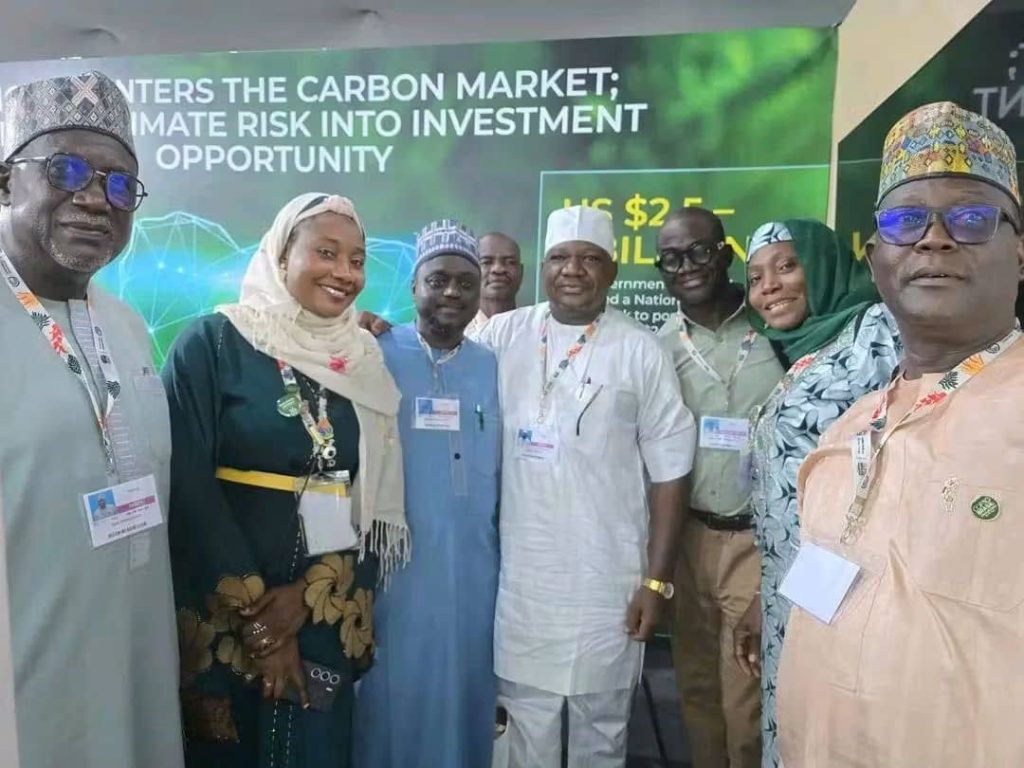
“Investing in Niger State means investing in the resilience of over six million people, safeguarding food systems, and protecting vital ecosystems that contribute to Nigeria’s environmental stability,” he said.
Garba described Niger State as a region rich in natural resources and agricultural potential, with a population committed to a climate smart future. He outlined the state’s Green Sustainable Agenda, which integrates climate action across key sectors such as agriculture, forestry, energy, water resources, waste management, and sustainable livelihoods, aligning closely with Nigeria’s NDCs and Africa’s demand for fair climate financing.
Despite ongoing initiatives—including renewable energy expansion, afforestation, climate-smart agriculture, and youth-led waste-to-wealth enterprises—Garba noted that limited funding continues to constrain impact. He therefore called on development partners, climate funds, and private investors to support Niger State through concessional finance, carbon market opportunities, and blended financing models.
He further stressed the need for technological innovation and partnerships with research institutions to accelerate clean energy adoption, strengthen digital climate information systems, and modernize agriculture.
Youth empowerment remains a key pillar of the state’s climate strategy. Garba highlighted plans to establish green innovation hubs, renewable energy clusters, and digital monitoring systems that will drive job creation and support green entrepreneurship.
He also drew attention to the harsh realities of climate change experienced by communities in Niger State—ranging from erratic rainfall and flooding to drought, desert encroachment, and falling crop yields. In response, the government has rolled out community-based adaptation measures that blend indigenous knowledge with modern solutions, including land restoration, irrigation support, and early-warning systems for farmers.