
At its 5th International Conference and Summit, Standup For Women Society challenges women to stop waiting for opportunities and start creating the platforms that will shape families, economies and nations
By Sharon Akuboh
There was a powerful message running through the conversations at the 5th Standup For Women Society (SWS) International Conference and Summit 2026: the future will not simply be handed to women.
Women must build it.
From leadership and entrepreneurship to technology, health, security and community development, the conference placed a spotlight on the growing responsibility of women to become architects of the future rather than spectators waiting for permission to participate.
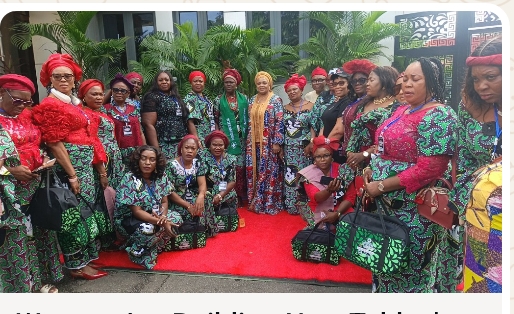
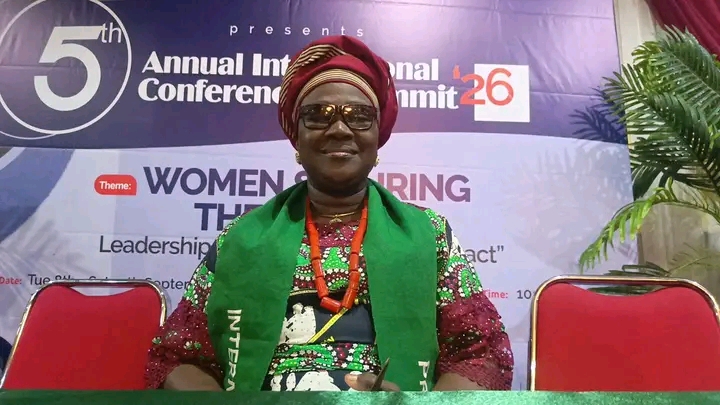
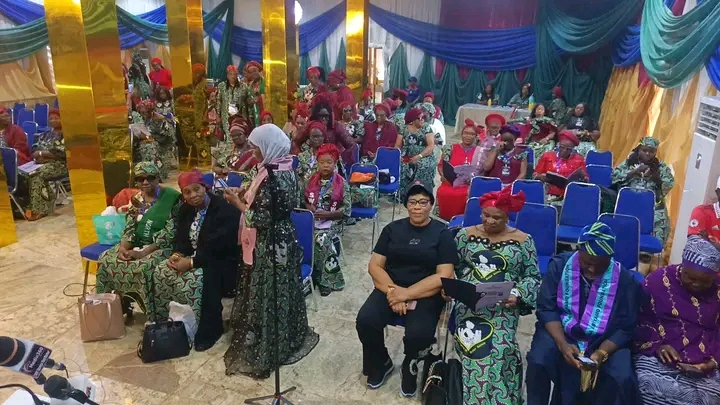
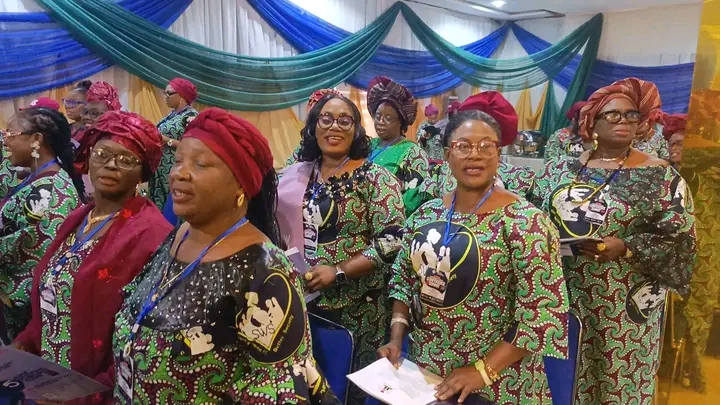
Held under the theme, “Women Securing the Future: Leadership, Prosperity and Global Impact,” the gathering brought together women from diverse professional and social backgrounds, government representatives, development partners, traditional and religious leaders, members of the diplomatic community and other stakeholders.
But beyond the speeches, handshakes and networking, the summit carried a deeper challenge—whether women are prepared to convert their growing influence into measurable impact.
For SWS International President and Board of Trustees Chair, Mrs. Deborah Libera, the answer must be yes.
Opening the conference, Libera made it clear that the theme was not designed merely to decorate a programme brochure. It was, in her words, a call to action.
The world is changing rapidly, she observed, with technology, artificial intelligence, climate change, economic transformation and global conflicts reshaping societies and redefining what leadership means.
In such an environment, she argued, women cannot afford to remain passive.
Her message was strikingly simple: women should stop waiting for invitations and begin creating opportunities.
“Women are no longer asking for a seat at the table—we are building new tables,” she declared.
That statement became one of the defining ideas of the summit.
It speaks to a changing understanding of women’s empowerment. Rather than measuring progress solely by how many women gain access to existing institutions, the conversation is increasingly shifting towards how many women are creating businesses, organisations, policies, initiatives and platforms through which others can also rise.
For SWS, that distinction matters.
A woman who succeeds alone has achieved something important. But a woman who succeeds and creates pathways for other women and girls to succeed multiplies that impact.
Beyond Personal Success
The SWS leadership challenged delegates to look beyond individual accomplishments and consider the wider consequences of their leadership.
Education, economic opportunity, digital competence, healthcare, justice, security and equal participation in decision-making were highlighted as areas where women must continue to push for progress.
The philosophy is straightforward: empowering women should produce results that travel beyond the individual.
As Libera put it, “When a woman rises, a family rises; when families rise, communities prosper; and when communities prosper, nations become stronger.”
It is a philosophy that places women at the centre of national development rather than treating women’s empowerment as a peripheral social issue.
The summit therefore became a meeting point for ideas, experiences and possibilities—with learning, mentorship, innovation, networking and strategic partnerships forming major components of the programme.
Rochas Okorocha: Investment in Women Cannot Wait
The Mother of the Day, Her Excellency Zinaria Nneoma Rochas Okorocha, reinforced the call for sustained investment in women and girls.
Her message centred on education, entrepreneurship, leadership development and skills acquisition.
For her, meaningful development cannot happen when a substantial segment of society is denied the tools required to participate fully in economic and social advancement.
She encouraged women to recognise the influence they already possess within their families and communities and to use that influence responsibly.
Economic independence, she emphasised, remains an important part of meaningful empowerment.
But empowerment, as reflected in her remarks, is not simply about what a woman can obtain for herself. It is also about what she can create for others.
Okorocha commended SWS for bringing women from different sectors together, providing an environment where experiences could be exchanged, relationships established and partnerships developed around the common goal of advancing women.
A Collective Responsibility
The Chairman of the occasion, Engr. Friday Michael, approached the issue from another important angle: collaboration.
He called for stronger cooperation among women, government, the private sector, civil society organisations and other stakeholders.
No single institution, he suggested, can solve the complex challenges confronting women.
Practical skills, leadership capacity and access to economic opportunities require deliberate investment.
His position was that women’s empowerment should not be viewed simply as charity or social responsibility. It is an investment with the potential to strengthen households, communities and the broader economy.
He consequently challenged participants to ensure that the discussions at the conference do not remain within the walls of the venue.
The real test, he suggested, would come after the conference—when delegates return to their workplaces, businesses, organisations and communities.
What will they do differently?
Who will they help?
What initiative will they start?
What policy will they influence?
What opportunity will they create?
Those questions give greater meaning to the conference’s central message.
When Leadership Means Saving a Life
In one of the summit’s most practical interventions, women were reminded that empowerment is not restricted to boardrooms, businesses or political spaces.
Sometimes, leadership begins with knowing what to do when someone’s life is suddenly at risk.
Participants received emergency-response training facilitated by Dr. Chineze Nnwuwa, Chairman of Emergency Response International.
The session focused on basic responses to potentially life-threatening situations, including cardiac emergencies and choking.
The practical training demonstrated the importance of immediate and appropriate action while professional medical assistance is being sought.
It added a different dimension to the conference.
Women were not only being encouraged to lead organisations or build businesses; they were being equipped with knowledge that could potentially save a life at home, in the workplace or within their communities.
That is empowerment in its most practical form.
A Walk Before the Talks
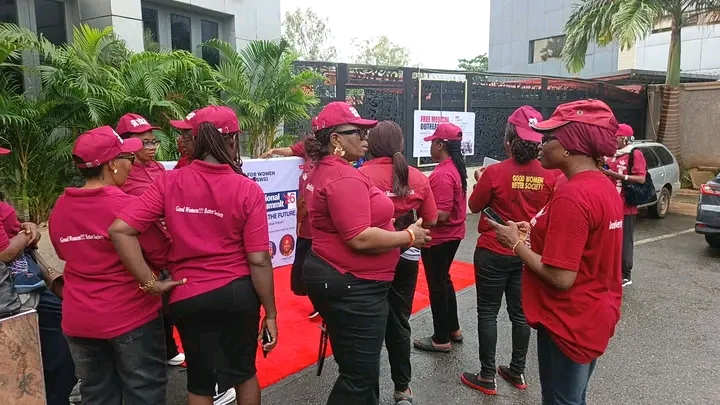
Before the formal sessions began, delegates also participated in an early morning road walk.
It was more than a physical exercise.
The walk offered participants an opportunity to interact, connect and build the camaraderie that would continue throughout the conference.
It also reflected the summit’s broader understanding of empowerment—one that recognises that professional success and leadership must exist alongside personal wellbeing.
Healthy women are better positioned to pursue demanding careers, manage businesses, serve communities and take on leadership responsibilities.
From Applause to Action
Perhaps the most important challenge emerging from the conference was what happens after the applause.
Conferences can produce powerful speeches, photographs, contacts and inspirational moments. But the true value of such gatherings is ultimately measured by what participants do with what they have learned.
SWS appears determined to push that conversation further.
The organisation’s emphasis on mentorship, capacity building, networking, exhibitions, leadership conversations and strategic partnerships points towards a model of empowerment that is intended to produce practical outcomes.
Women, the conference stressed, must develop skills relevant to a rapidly changing world.
They must embrace technology.
They must understand emerging opportunities.
They must build economic independence.
They must support other women.
And, importantly, they must be willing to occupy spaces where decisions affecting society are made.
The message is not that women should simply wait to be included.
It is that women should become creators of the spaces themselves.
The Future Is Being Built Now
As the 5th SWS International Conference and Summit 2026 opened, the challenge before the delegates was therefore larger than the conference theme.
It was a challenge to rethink what leadership means.
It was a call to move from representation to influence, from participation to ownership, and from individual achievement to collective prosperity.
Libera urged participants to leave the gathering with renewed courage, wisdom and determination.
She appreciated the keynote speakers, facilitators, sponsors, development partners, supporters, delegates and SWS members whose contributions helped make the gathering possible.
Drawing inspiration from Nelson Mandela, she reminded the women that “it always seems impossible until it is done.”
The conference was subsequently declared officially open.
Yet perhaps the real opening was not of a conference.
It was the opening of a challenge.
A challenge to women to look beyond the seats already available and ask a more consequential question:
What table will you build?
Because securing the future is not simply about ensuring that women have a place in tomorrow.
It is about ensuring that women are among those designing, constructing and determining what tomorrow looks like.
And if the message from SWS is anything to go by, women are ready to build.