
As the Economic Community of West African States (ECOWAS) celebrates its golden jubilee, Nigeria is taking center stage, reaffirming its commitment to regional integration, economic development, and diplomatic reconciliation.
At a world Press conference in Abuja, Ambassador Yusuf Maitama Tuggar, Nigeria’s Minister of Foreign Affairs and Chairman of the ECOWAS Council of Ministers, underscored the dual purpose of the 50th anniversary: honoring ECOWAS’s past achievements and charting a revitalized path forward.
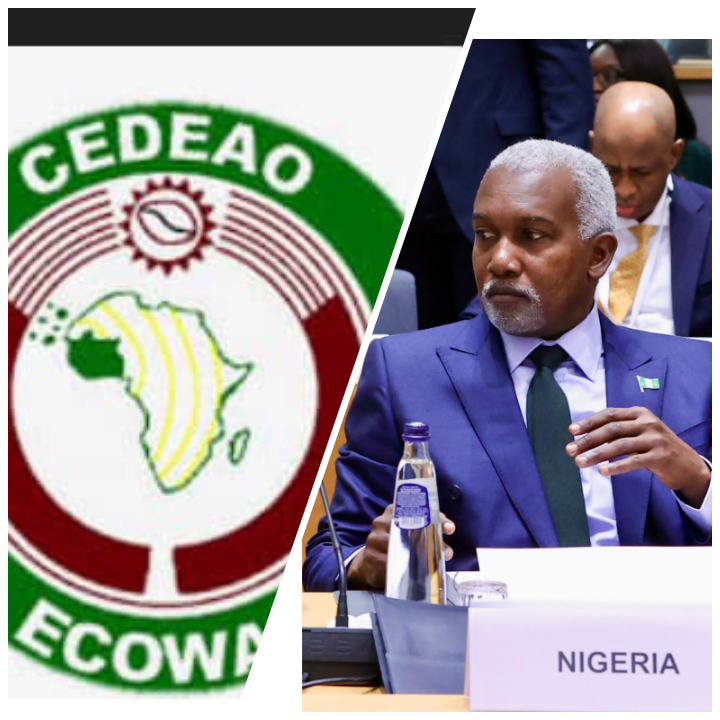
“Nigeria is not just part of ECOWAS—we’re shaping its future,” Tuggar declared, emphasizing the country’s leadership role in driving regional progress. He highlighted ambitious cross-border infrastructure projects, including the Abidjan-Lagos and Abidjan-Dakar trade corridors and a pioneering 15-nation gas pipeline. ECOWAS’s standardized regional frameworks in energy, water, and health sectors were also lauded as models for collective progress.
A standout innovation is the ECOWAS Community Levy, a self-financing mechanism credited largely to Nigeria’s influence. Tuggar described it as “a quiet revolution,” showcasing the bloc’s ability to adapt and innovate.
Despite the celebrations, ECOWAS faces challenges, including the withdrawal of Mali, Burkina Faso, and Niger, each under military rule. However, Ambassador Tuggar expressed cautious optimism about their eventual return, stating that the door remains open. “ECOWAS has done its best to offer these countries the opportunity to remain part of the community,” he said.
As ECOWAS commemorates its 50th year, the message from Nigeria is clear: West Africa is poised to rise stronger, with renewed cooperation, visionary infrastructure, and the spirit of unity. “Let this be a call to action,” Tuggar concluded.
“West Africa is rising. And Nigeria is leading the way.” With this commitment to regional unity, Nigeria is set to play a pivotal role in shaping the future of ECOWAS.