
Nkechinyere Ewa Opkara
MARK Abani, a renowned farmer and agriculture consultant, said access to land for smallholder women farmers has remained one of the persistent issues challenging food security in Nigeria.
He said both national and local farmers are faced with the same problem and called on the government at all levels to address the issue.
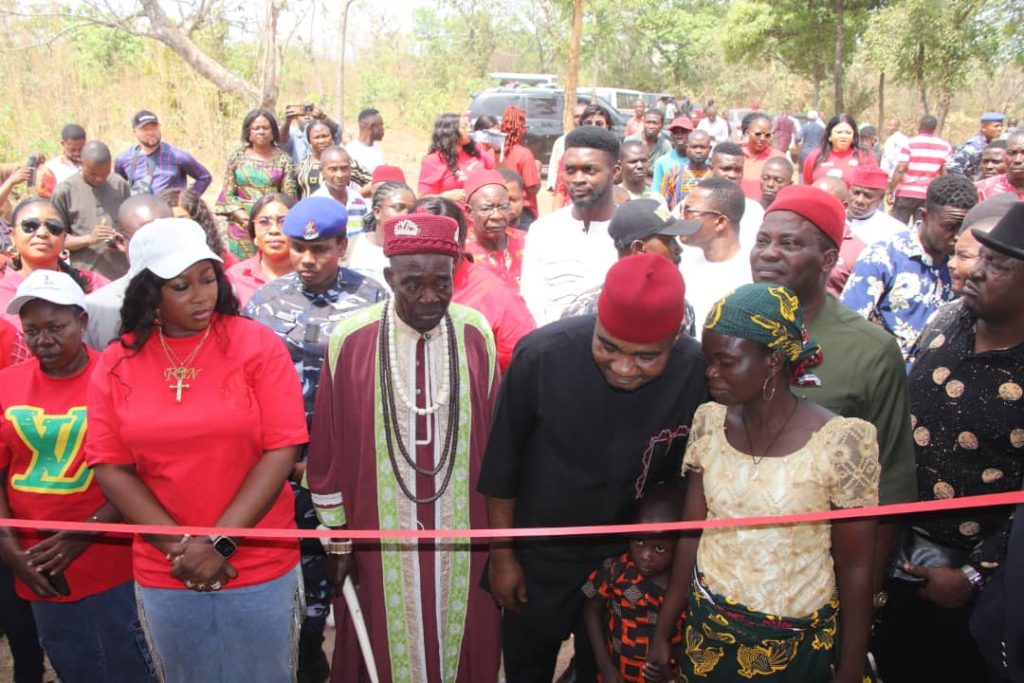
He spoke in Abakaliki, Ebonyi state capital, during a town hall meeting on access and control over land for smallholder women farmers and young people, an event put together by Participatory Development Alternatives (PDA) with support from Action-Aid Nigeria.
Abani, the Executive Chair of Participatory Development Alternatives (PDA), noted that through agriculture and food production, the government could reduce inflation from 34 per cent, the current rate, to 15 per cent.
He noted that for those rural farmers who are growing food items, it is not just to grow the food but also to have a market where they will sell the food while it is still fresh because the biggest source of loss in the agricultural chain is post-harvest losses.
Abani regretted that even with court judgements, including that of the Supreme Court, affirming women’s right to inheritance and ownership of lands, the implementation remains zero.
“But it is only by continued advocacy and by getting younger and more people involved in understanding the issues and stark reality that if we don’t make land available to women who are primary farmers to farm, this objective may not be achieved.
“So, what we are trying to do is to have a public conversation whereby traditional rulers are meant to understand the importance, or at least, the need for women to have access to land, and see how they can influence that.
“Government stakeholders to also take on board the fact that we need access to that land for women.
“And more importantly, to bring out other issues: it’s not only just sufficient to give land but to give arable lands and be able to leave it for them long enough so that if they invest money to develop it, that they will get their returns.
“Both government and traditional stakeholders need to understand that as economies change, they also have to change their approach.”
Speaking about his organisation, PDA, Abani said it is working with the Ebonyi State Agricultural Development project under the auspices of ActionAid to train women farmers and gain greater access to them.
He added: “Over the last three years, we have been running quite a number of trainings.
“Over 9,000 women a year have been trained in the last two years, and we are training more.”
Andrina Okwor, the Ebonyi State SWOFON Coordinator, in a remark, said their major request to the government was to allocate permanent agricultural lands to SWOFON.
She noted that increasing women’s access to farmlands and other agricultural facilities would boost food production as well as enhance the economy.
The Senior Special Assistant to the Ebonyi State Governor on Agriculture, Hon. Anthony Nwegede, highlighted some of the things the present administration has done to boost agriculture, including procurement of over 15 tractors, payment of IFAD counterpart funding, agricultural training and grants to youths, as well as distribution of fertilizers and other inputs to farmers.
Nwegede emphasised that all the lands are owned by the government, adding: “In this state, there is a committee in charge of land recovery and allocation.
“The smallholder women farmers should take the advantage, apply and follow the procedure to secure land for their agricultural activities without any segregation.”
Nweze Stephen, representing the traditional ruler of the Okpitumo community in Abakaliki local government, and other traditional rulers, including Patrick Oko-Agha and Chinedu Chibueze Agbo from Afikpo and Ohaukwu local government areas, in their commitment, said that empowering women farmers with land would boost food production.
Oko-Agha noted that the issue of women’s mobility through marriage was part of the reason why it appears that women don’t own land in their community.
He pledged to go back to area to project the advocacy, starting from his cabinet through intercessory and other meetings in his kingdom.